Trusted UK Casinos: How to Check a Licence
 Available in GB

A practical guide to verifying operator authorisation and checking how bonuses, payment methods, apps and regional rules affect online play.
Table of Contents
- What a UK Casino Licence Actually Tells You
- Real-Money Play Starts With Verification and Limits
- How to Read a Casino Site’s Licence Record
- What “Best” Should Mean When You’re Checking a Casino
- Crypto Casinos Still Need the Right UK Licence
- Why Great Britain and Northern Ireland Need Separate Checks
- Bonuses, Free Spins and the Small Print That Changes Their Value
- Casino Apps: Check the Same Rules Before You Sign In
- Bitcoin and Dogecoin Casinos: Don’t Mistake a Coin for a Licence
- Live Tables and E-Wallets: Check the Terms Before You Pay
What a UK Casino Licence Actually Tells You
When you are deciding whether an online casino is trustworthy, start with the question of who regulates its gambling business. For customers in Great Britain, a remote operator needs the relevant UK Gambling Commission licence to offer gambling facilities. That requirement applies whether the company is based locally or abroad. A foreign address does not make the British market rules disappear.
That is the basic meaning of a UKGC Licence: the operator is authorised to provide the relevant gambling services to customers in Great Britain under the Commission’s regime. It is not simply a badge saying that a casino has been reviewed, nor is it a customer rating. The distinction matters. A site may look polished and describe itself as reliable, but those claims do not establish that its operator has the required authorisation.
The location point catches people out. You might see a company’s registered address outside Britain and assume that its local regulator is the only one that matters. For remote gambling offered to people here, that assumption is wrong. The operator’s base does not decide whether the UKGC requirement applies; the service being offered to consumers in Great Britain does. A licence from another jurisdiction does not, by itself, replace the British permission.
Non-UK Regulated Casinos: What UK Players Should Know
A licence is therefore a regulatory starting point, not a promise that every part of a gambling experience will suit you. It does not mean you will win, that a particular game is fair for your personal purposes, or that you will never have a disagreement with the operator. Nor does the word “trusted” in a site’s advertising add anything to its regulatory status. Treat the licence as a concrete fact about the operator’s permission, rather than a broad endorsement.
This is useful because the online casino market has plenty of confident wording. “Best”, “most trusted” and similar labels can appear beside almost any design or offer. They are conclusions someone wants you to accept. The licence answers a narrower question: is the remote gambling business authorised by the UK regulator for the British market? That answer has more practical weight than a superlative, even though it cannot tell you everything you might want to know before opening an account.
The same principle applies when a casino is presented under a familiar brand while the company running the service has a different name. The brand and the regulated business are not necessarily identical. What matters for the licensing question is the operator responsible for the gambling service and whether the relevant UKGC permission covers it. A site’s appearance, customer-facing name or overseas office should not distract from that basic relationship.
There is also a practical protection built into the British regulatory framework: online operators serving customers under the Commission’s Great Britain regime must take part in GAMSTOP. Participation became compulsory on 31 March 2020. That is a specific feature of the regulated system, not a general statement that every operator will handle every customer situation perfectly. Still, it shows that a UKGC Licence is connected to rules and arrangements beyond the wording on a homepage.
I would not use “trusted UK online casino” as a category in its own right. It is too broad to tell you who holds the licence or what service that permission covers. Instead, separate the claim from the check: promotional language is an opinion; the operator’s regulatory status is something you can verify. If those two things appear to conflict, give the verifiable status more weight.
Casinos: UK Licensing and Access Options
This also explains why an overseas operator cannot settle the question merely by pointing to a licence issued elsewhere. That licence may be relevant in the place where the business is based, but it does not remove the UKGC requirement when the operator offers remote gambling to consumers in Great Britain. For a British customer, the important issue is not whether the company has some regulatory paperwork somewhere. It is whether it has the right UK authorisation for the service it is offering here.
So read a UKGC Licence as a boundary and an accountability signal: it indicates that the operator falls within the Commission’s regulatory system for remote gambling offered in Great Britain. It is a stronger basis for assessing a casino than a trust slogan, but it is not a guarantee of a perfect experience. Keep those two ideas separate. Useful distinction.
Real-Money Play Starts With Verification and Limits
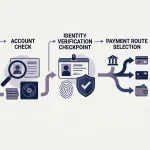
Opening an account is not the same as being ready to gamble. For real-money play in England, Scotland and Wales, the operator must check who you are before you can deposit or play. That means a trusted real-money casino should not invite you to skip straight to the cashier and sort out your identity later.
In practice, expect to provide identity and address documents. A passport or driving licence can serve as photo identification, while a recent utility bill can help confirm your address. The operator may ask you to upload clear images. Make sure the details on your account match your documents; a mismatch can hold up checks when you want to use the account.
I treat this as part of opening the account, not as an annoying extra after the fun has started. If a site lets you deposit before checking your age, that is not a harmless shortcut. UK rules require age verification before funds can be deposited into a gambling account, and verification must also be complete before play.
What the checks mean for you
The point is to establish your identity and eligibility, not merely to collect paperwork. You may also encounter identity or payment-ownership questions: the operator needs to be satisfied that the account and the payment activity belong to you. Keep your details accurate and respond to a request through the account’s proper channels rather than sending documents to an address you have not confirmed.
A site may describe itself as one of the most trusted places to play for real money, but that wording does not replace the checks. Nor does a polished sign-up page. I look at what happens when I try to open an account: are the requirements clear, and does the process stop before a deposit if the necessary checks are incomplete? Those are practical signs of how the account is operated, not a guarantee of a particular experience.
You should also be prompted to set a financial limit before making your first deposit. Once the account is open, limit controls should be accessible so you can manage your spending without hunting through unrelated menus. A reduction takes effect immediately; an increase has a cooling-off delay. That difference matters if you change your mind in the moment. The control is meant to give you room to pause, not to make a higher limit available instantly.
Slot stakes depend on age
The maximum stake for an online slot spin is not the same for every adult. Under the UKGC’s published rule, a player aged 25 or over can stake no more than £5 per spin. For players aged 18 to 24, the cap is £2 per spin.
That is a stake limit, not a suggested budget or a promise about how long a balance will last. It applies to each spin, so check the amount shown before you start rather than assuming every game or setting will suit you. If you are in the younger age group, a spin above the permitted cap should not be available to you at a UK-licensed casino.
Do
- Provide identity and address documents
- Set a financial limit before the first deposit
- Check stake limits based on your age
Don’t
- Skip identity checks to reach the cashier faster
- Deposit funds before age verification is complete
- Assume every slot game suits your age-based stake cap
This is one reason I do not judge a real-money casino by its game lobby alone. A wide choice of slots tells you little about whether you can set sensible boundaries or whether the account handles the age rules correctly. The useful test is the whole routine: identity checks first, a financial limit before the first deposit, and account controls you can find again later.
Verification can feel like a delay when you are ready to play. It is better to know what is required before you deposit than to discover the account is incomplete when you want to withdraw. If something in the process is unclear, stop and ask the operator to explain it before adding money. A little friction up front is preferable to a surprise later.
How to Read a Casino Site’s Licence Record
A casino’s name on its homepage is not always the name you need to look for in a regulator’s records. The useful check is the link between the website you intend to use and the legal operator shown on the public register. I start with the exact domain, then compare it with the operator details recorded there. It is a small distinction, but it can stop a familiar brand name doing all the work.
For 333casino.com, a public regulatory register entry identifies Grace Media (Gibraltar) Limited as the operator and records the domain as a White Label domain under account 57869. That tells you the register connects this particular website to that operator’s account. It does not mean the brand name and the legal company name are interchangeable, and it is not a general endorsement of every casino using a similar name.
Match the domain, not just the brand
Start with the address bar. Write down the casino’s full domain, including its ending, and compare it with the domain recorded in the register. A close-looking brand name is not enough: a different web address could point somewhere else. If you reach the casino through an advert, a review page or a saved link, check the domain you actually land on rather than assuming it is the one described elsewhere.
Then follow the record to the operator. In the 333casino.com example, the domain is linked to Grace Media (Gibraltar) Limited, not listed as though “333 Casino” were itself the company name. The account number gives you another detail to compare if you need to distinguish one operator record from another. I would keep the spelling of the company name and the domain side by side; it makes mismatches easier to spot.
A White Label designation is also worth noticing. It describes how the domain is recorded in relation to the operator’s account; it is not a substitute for checking that the domain itself appears in the record. If a casino’s site names one company while the register connects its domain to another, do not smooth over the difference. Find out which entity is actually responsible for the site before treating the paperwork as a match.
What the record can—and cannot—tell you
A matching entry is useful evidence about the recorded relationship between a domain and an operator. It is more specific than a badge in a footer or a claim on a casino review page, because you can compare the site address with a public record. That is the part I would use when assessing whether a casino has a traceable operator behind its brand.
Checking a Domain
Step 1: Identify the domain
Write down the full domain from your browser’s address bar, including the ending.
Step 2: Consult the register
Search for that exact domain in the public regulatory register.
Step 3: Verify the operator
Compare the operator name and account number in the register with the company responsible for the site.
But the entry is not a rating. It does not establish that a casino has the best service, that its bonuses are generous, or that every customer will have a good experience. A record also cannot settle whether a particular promotion suits you; that depends on the promotion’s own terms. “Trusted” is a broad judgement, not a field on an operator’s account.
The same caution applies to review sites. A specialist review may help you understand how a brand presents itself, but its description is not the public register. If a review gives an operator name or domain, use those details as leads and check them against the record rather than treating the review as proof.
Make the check part of your routine
Before relying on a casino’s claims, compare three things: the domain in your browser, the domain named in the register, and the operator associated with that entry. If one does not line up, pause rather than guessing that the difference is harmless. A brand can be memorable; legal entities are less so.
Also bear in mind that a register entry describes recorded information, not a permanent guarantee about what you are viewing today. Recheck it if the domain or operator details change. For 333casino.com, the recorded connection is specific: the public register links that domain to Grace Media (Gibraltar) Limited as a White Label domain under account 57869. That is a concrete starting point for checking the site’s identity—not a shortcut around reading the details yourself.
What “Best” Should Mean When You’re Checking a Casino
When choosing a UK casino for 2026, you can use this list as a starting point and consider the available payout information as part of your decision.
1. Chanze
Payout speed: 1-3 business days Chanze lists a payout speed of 1–3 business days, giving you a stated timeframe to consider.
2. WinBeast
Payout speed: 1-3 business days WinBeast lists a payout speed of 1–3 business days, giving you a stated timeframe to consider.
3. NightWin
Payout speed: 1-3 business days NightWin lists a payout speed of 1–3 business days, giving you a stated timeframe to consider.
4. NightLuck
Payout speed: 1-3 business days NightLuck lists a payout speed of 1–3 business days, giving you a stated timeframe to consider.
5. Jetsetspins
Payout speed: 1-3 business days Jetsetspins lists a payout speed of 1–3 business days, giving you a stated timeframe to consider.
6. SpinFormula
Payout speed: 1-3 business days SpinFormula lists a payout speed of 1–3 business days, giving you a stated timeframe to consider.
7. Revery Play
Payout speed: 1-3 business days Revery Play lists a payout speed of 1–3 business days, giving you a stated timeframe to consider.
8. BeOnBet
Payout speed: 1-3 business days BeOnBet lists a payout speed of 1–3 business days, giving you a stated timeframe to consider.
9. EvoSpin
Payout speed: 1-3 business days EvoSpin lists a payout speed of 1–3 business days, giving you a stated timeframe to consider.
10. Britsino
Payout speed: 1-3 business days Britsino lists a payout speed of 1–3 business days, giving you a stated timeframe to consider.
“Best” and “most trusted” are judgements, not regulatory categories. A casino can put either phrase on a page, but the wording alone tells you nothing about who runs the site or what the public record says. I treat it as a claim to examine, not a verdict to borrow.
A useful distinction is between a broad label and a detail you can verify. The label might reflect an editor’s view, a customer rating or simply promotional copy. Those are not interchangeable, and none should be mistaken for an official endorsement. If a review calls a casino trusted, look for the reasoning behind the description: does it point to an identifiable operator and a record that can be checked, or leave you with a warm adjective and no trail?
LeoVegas gives a concrete example of what a verifiable detail looks like. A check of the Gambling Commission’s public register lists LeoVegas Gaming PLC under operator account number 39198, and records leovegas.co.uk as the active UK-facing domain associated with that account. That establishes a recorded link between the operator and the domain. It does not establish that LeoVegas is the best casino, guarantee a particular experience, or turn the register into a consumer review. Useful, but not magic.
That separation matters when you see a list of “trusted UK casinos”. Ask what the list is measuring and who made the judgement. If it offers no clear basis, read it as an opinion rather than an independent standard. A named operator and matching domain are firmer ground than a badge or an unsupported superlative, but they still answer a limited question: what the register records.
For LeoVegas, the Gambling Commission’s public register lists LeoVegas Gaming PLC under operator account number 39198, with leovegas.co.uk as the active UK-facing domain.
I’d also keep trust in the casino separate from trust in its games. A casino’s branding cannot, by itself, tell you how a particular game behaves or what terms apply to it. Don’t let a reassuring site-wide label do the work of checking the specific thing you plan to use. “Trusted” is not a shortcut around details.
When deciding whether a casino deserves your confidence, focus on evidence that can be pinned down: the operator’s identity, the domain linked to it, and the status shown in the relevant public record. Then treat rankings and glowing descriptions as someone’s assessment, not proof. That is a less exciting way to read “best”, admittedly. Better that than taking the headline on trust.
Crypto Casinos Still Need the Right UK Licence
A casino’s crypto branding does not change the rule for serving customers in Great Britain. If a remote gambling business offers facilities to people here, it needs the relevant UK Gambling Commission licence, wherever the business itself is based. That is the starting point when you are weighing whether a crypto-facing casino deserves your trust.
It is easy to let the payment angle dominate the decision. A site may present itself as modern or international, but those labels do not tell you whether it has permission to offer remote gambling to customers in Great Britain. Nor does the operator’s location settle the question: being based overseas does not remove the licensing requirement.
USA casinos for UK players: rules and risks
I would separate two things that are often bundled together: how a site presents its payment options, and whether its gambling operation is authorised for this market. The first is about how the service works; the second is the regulatory baseline. One cannot stand in for the other.
That distinction matters because “trusted” is a judgement, not a licence category. A site can use polished language, make confident claims or put crypto front and centre. None of that answers the basic question of whether the business offering gambling to British customers holds the appropriate UKGC Licence. A familiar-looking brand is not proof either.
The sensible approach is to treat the licence requirement as a threshold, not as a complete verdict on every aspect of a casino. It tells you that the operator must be licensed to provide remote gambling in Great Britain. It does not, by itself, tell you whether the site’s payment arrangements suit you or whether its terms are clear. Those are separate things to understand before you commit money.
If you are comparing crypto-facing casinos, keep the same standard you would use for any other remote casino. Do not give an overseas address or a crypto-focused identity special status. The relevant point is whether the business offers gambling facilities to Great Britain and, if it does, whether it holds the required UKGC Licence. The rule follows the service offered to customers here, not the branding on the homepage.
That is the useful meaning of trust in this context: start with regulatory status, then make any further judgement on information you can actually assess. A coin, a logo or a claim of being among the most trusted does not replace the licence. Marketing can be polished. The licensing requirement is the part that matters first.
Why Great Britain and Northern Ireland Need Separate Checks
“UK casino” sounds like one straightforward category, but the legal boundary matters. The Gambling Commission’s remit under the Gambling Act 2005 covers England, Scotland and Wales. Northern Ireland does not sit within that same framework for remote gambling.
That distinction changes what a UKGC entry can tell you. If you are assessing a casino for someone in Great Britain, the Commission’s register is relevant to the operator’s position in that market. If the player is in Northern Ireland, the same entry does not, by itself, establish the casino’s status there. The regulator’s reach is not a single blanket covering every part of the UK.
I’d be careful with broad claims that a site is “trusted in the UK” unless they make clear which jurisdiction they mean. A casino might describe itself as UK-facing, or display information about the Gambling Commission, but those phrases do not erase the legal difference between Great Britain and Northern Ireland. A UKGC record answers a question about the Commission’s own remit; it should not be stretched into a conclusion about a different jurisdiction.
This is easy to miss because people use “UK” as shorthand in everyday conversation. It is less useful when you are checking a casino’s regulatory position. Your location matters: a result that makes sense for a player in Wales is not automatically a complete answer for a player in Belfast. Same country label, different boundary.
For readers in Great Britain, the relevant question is whether the operator falls under the Commission’s requirements for remote gambling offered there. For readers in Northern Ireland, don’t assume that a Great Britain-focused licence check settles the matter. The Commission does not regulate remote-gambling provision in Northern Ireland in the same way.
That is the point of making separate checks: not to suggest that one region is safer or less safe, but to avoid treating two legal contexts as interchangeable. A “trusted casino UK” claim can sound reassuring while staying vague about where it applies. Read it narrowly. The jurisdiction is part of the claim, not a footnote.
No shortcut here.
Bonuses, Free Spins and the Small Print That Changes Their Value
A bonus headline is only the starting point. Before you decide whether an offer is useful, check who can claim it, what you must wager, which games count and when the promotion expires. I treat those details as part of the offer, not as footnotes.
Eligibility can rule you out before you begin. A specialist review describes welcome deals as restricted to new customers, with one offer per household; it also notes that some payment methods, including e-wallets, may be excluded. Those conditions are not universal rules for every casino, so read the terms attached to the specific promotion. If you share a household or intend to pay by a particular method, check those clauses before opting in.
Wagering is the amount of qualifying stakes required before bonus funds or winnings can be withdrawn. One specialist review illustrates the arithmetic with a £20 bonus carrying 10x wagering: the required total stakes are £200. That is turnover, not a promise that you will win that amount or retain the bonus. Check whether the requirement applies to the bonus alone or to the deposit and bonus together; the wording changes how much play is required.
Bonus Wagering Example
With a £20 bonus carrying 10x wagering, the required total stakes are £200. This is the turnover required before bonus funds or winnings can be withdrawn.
Game contribution matters just as much. A specialist review says slots count at 100% towards wagering in the offer it discusses, while live tables and blackjack may count at a lower rate or not count at all. So a promotion that looks straightforward can take longer to clear if you choose a game that contributes less. The terms should say which games qualify and how much each contributes. Read that before you play, not after.
Free spins need their own check. Find out which game they apply to, whether any resulting winnings carry wagering requirements, and when the spins expire. A specialist review describes bonus funds and free spins as having a set expiry period, often within a 7-to-30-day range. That is an account of the offers it reviewed, not a fixed rule across casinos. The expiry shown in the specific terms is the one that matters.
I also look for the steps required to activate a promotion. Is opting in necessary? Does a qualifying deposit have to be made first? Are there restrictions on withdrawing while the offer is active? These details determine whether the headline value is practical for you. A large bonus with conditions you would not meet is not a better deal; it is simply a larger number on the page.
A clear promotion should let you identify eligibility, wagering, game contribution and expiry without guesswork. If those terms are hard to find or don’t explain how a free-spin win is treated, pause before accepting. Read the rules first. That’s the useful bit.
Casino Apps: Check the Same Rules Before You Sign In
A casino app can make the first steps feel quicker, but it does not change what has to happen before real-money play. Under UK rules, the operator must verify you before you deposit or play. If an app invites you to fund an account first and leave checks until later, stop and establish what process it is asking you to follow.
I treat the app as a way into an account, not as proof that the account is ready for gambling. Before putting money in, look for a clear explanation of how your identity will be checked and what information you may need to provide. Read the account instructions rather than assuming that installing the app, creating a login or passing a device check completes the required verification.
That distinction matters when you are comparing casino apps in the UK. A polished screen tells you little about whether you can proceed lawfully or what will happen when you try to deposit. The practical checkpoint is whether the operator asks you to complete verification before depositing or playing. If the instructions are unclear, contact the operator through its stated support route and wait for a clear answer before proceeding.
Also make sure you know which operator sits behind the app and that you are using its genuine service. An app’s name or appearance, on its own, does not establish who runs the gambling account. I would not treat a listing, advert or familiar-looking logo as a substitute for checking the operator’s details.
Keep the order simple: identify the operator, read its verification instructions, complete the checks, then consider whether to deposit. If you cannot establish how verification works before reaching the payment step, do not rush through it. An app should not make the basic rules harder to see.
Casino Without a UK Licence: What It Means
Bitcoin and Dogecoin Casinos: Don’t Mistake a Coin for a Licence
Bitcoin and Dogecoin can make a casino sound different, but the coin named on a page does not tell you whether the operator is authorised to serve players in Great Britain. I treat those as two separate questions: what payment options a site says it offers, and whether its operator holds the right UKGC Licence.
For remote gambling offered to customers in Great Britain, the operator needs the relevant UK Gambling Commission licence wherever the business is based. A cryptocurrency label does not create an exemption. Nor does a page describing a casino as British, trusted or suitable for UK players establish that it is licensed.
That distinction matters when a site promotes Bitcoin or Dogecoin prominently. The branding may be about its intended payment audience, but it is not proof of regulatory status. Before you consider playing, establish which business operates the site and whether that operator is licensed for the British market. A payment logo, coin name or promotional claim cannot answer that on its own.
I would also avoid treating the two coins as interchangeable or assuming a casino accepts either one just because it mentions crypto. Payment options can differ from site to site, and a deposit claim does not establish what withdrawals are available. Check the operator’s own current terms for those details, separately from its licensing status.
If the operator cannot be linked to a relevant UKGC Licence, the fact that it mentions Bitcoin or Dogecoin does not make it a trusted choice for someone in Great Britain. Equally, a licence is not a promise that a particular coin can be used. Keep the checks distinct: first the operator’s standing, then the payment terms.
That is the useful test behind searches for casinos involving Bitcoin or Dogecoin. Don’t let a familiar coin name do the work of a licence check. Payment branding is not regulation.
Live Tables and E-Wallets: Check the Terms Before You Pay
A live table can look like an easy way to clear a promotion, but the wagering rules may treat it very differently from a slot. One specialist review reports slots counting at full value towards wagering, while live tables and blackjack may count for less or not count at all. Check the game-contribution table in the offer terms before you opt in; otherwise, your play may barely move the requirement.
The same care applies to e-wallets. PayPal is a payment option to check, not a promise that every casino accepts it for deposits or withdrawals. Those two services can be treated separately, so read the cashier information for each. Also check whether using a particular payment method affects bonus eligibility.
Timing figures need context, too. One specialist review puts PayPal withdrawals at 4–6 hours on weekdays, with processing stretching to 8–10 hours from Friday to Sunday. It also notes that a first withdrawal can take an additional 12–24 hours for document checks. These are reported timings, not a guarantee for your account: the operator’s review process and the payment service both matter.
If you are weighing up a live-dealer site or an e-wallet casino, I would check three things before depositing: whether your intended payment method is available for the transaction you need, whether it excludes you from a promotion, and how the bonus treats live games. Then look at withdrawal timing separately from deposit speed. A quick deposit tells you nothing about how quickly a withdrawal will arrive.
Keep the terms open while you decide. The small print is where a live-table contribution rate, a payment restriction or a first-withdrawal check can change the practical value of an offer. Better to spot that before money is in the account.
Is 333 Casino licensed for Great Britain?
Yes. The UK Gambling Commission’s public register links 333casino.com to Grace Media (Gibraltar) Limited, account 57869, as a White Label domain.
How can I check whether a casino is legal?
Check the UK Gambling Commission’s public register for the operator and the domain it uses. A licence from another jurisdiction does not replace the UK authorisation needed to offer remote gambling in Great Britain.
What is the fastest withdrawal method?
PayPal is the fastest listed method, with withdrawals taking roughly 4–6 hours on weekdays and 8–10 hours from Friday to Sunday.
What payment types are listed?
The listed payment types are PayPal, debit cards and bank transfers.
Casinos

Anjouan Casino Licence and UK Rules Explained
An Anjouan authorisation is not a substitute for a UK Gambling Commission licence when gambling...

Casino Apps UK: App vs Mobile Browser Play
Learn how app and browser access differ, and what to check when managing money, games,...

Foreign casinos for UK players: licensing explained
A foreign casino may accept British customers without holding a UKGC licence; its terms, payment...

International Casinos for UK Players: What to Know
The guide explains how UKGC licensing differs from offshore status and what to consider when...

Mobile casino deposits by phone credit in the UK
Phone-credit deposits are billed through a mobile account, with the charge handled differently on contract...

Offshore casino sites for UK players: what to know
A guide to licensing, payments, verification and the limits of offshore casino comparisons for UK...

Offshore Casinos for UK Players: Rules and Risks
An offshore site may accept British customers without holding the UKGC authorisation required to offer...

British Casinos Not on GamStop: What to Check
GamStop participation is required for UKGC-licensed operators, while sites outside that framework need separate scrutiny....

Casino Sites Not Registered with GamStop in the UK
The label describes exclusion coverage, not a guarantee of licensing, protections, payment options or suitability....

Non-UK Licence Casinos: What the Licence Means
Licensing jurisdiction shapes regulatory oversight, but the label alone does not establish the safeguards or...

Casino no ID verification in the UK: what it means
A quick sign-up does not remove age and identity checks, which may be requested at...

Casino Without a UK Licence: What It Means
A UKGC licence is distinct from an overseas licence, with implications for player protections, payments,...

Casinos That Bypass GamStop: What UK Players Should Know
GamStop applies to UKGC-licensed operators, while casinos outside that network may not offer the same...

Curaçao Casino Licence in the UK: What It Means
A Curaçao label points to a licensing jurisdiction, not necessarily where a casino operates or...

Gibraltar Casino Licence for UK Players: Key Checks
A Gibraltar label does not settle which rules apply; licensing, account terms and support arrangements...

Merkur Casino Online UK: Games, Sites and Checks
Game information, casino listings, bonus terms and payment checks can help distinguish a Merkur title...

How to Assess the Most Trustworthy Online Casinos in the UK
A practical way to assess casino claims, from permission to serve Great Britain to the...

No Account Casino UK: What the Label Means
A practical look at simplified sign-up, player records, UK remote-play rules and the payment and...

No ID Verification Withdrawal Casinos in the UK
UK rules require licensed casinos to check age and identity before gambling, while offshore sites...

Non-Gamban Casinos in the UK: What the Label Means
A site's absence from Gamban's coverage does not establish its safety, licensing or suitability, and...

Non-GamStop Curaçao casino sites: claims explained
This guide distinguishes Curaçao claims from UK licensing requirements and explains limits around self-exclusion, payments...

Non-GamStop European Casinos: UK Exclusion Rules
European branding does not establish a site's UK status; licensing and the scope of a...

Non-UK Registered Casinos: How Regulation Works
A foreign licence is not a UKGC licence; understanding who oversees a casino helps clarify...

Non-UK Regulated Casinos: What UK Players Should Know
The guide distinguishes an operator’s UK permission from an offshore licence and outlines potential differences...

Non-UKGC Licensed Casinos: What UK Players Should Know
A guide to UKGC oversight, offshore licensing, GamStop and the practical differences for people in...

Online Casino Malta MGA Licence in the UK: What It Means
The guide distinguishes Malta’s player-money safeguards from the separate requirement to be authorised for remote...

Online Casino No Registration UK: What It Means
Browser access can make games easy to open, but it does not remove account requirements...

Online Casinos With No Sister Sites in the UK
Learn how ownership and shared platforms can link casino brands, why similar design alone proves...

Online slots not on GamStop: how they work
GamStop applies at UK Gambling Commission-licensed operators; sites beyond that reach do not apply its...

Safe Online Casinos in the UK: Licence Checks
A practical guide to checking a casino’s UKGC status, business details, real-money terms, payment rules...

Online Casino Payouts in the UK: RTP Explained
RTP describes an average across relevant play, not a promise of what an individual session...

Trusted Casinos Not on GamStop UK: What to Check
A practical look at licensing, self-exclusion, payments, bonuses and the checks behind claims made by...

USA casinos for UK players: rules and risks
The guide explains the UK rules for overseas operators and the practical concerns around access,...

VPN-Friendly Casinos in the UK: What to Know
Understand how VPN access relates to casino terms, UK player protections, identity checks and payment...