Offshore casino sites for UK players: what to know
 Available in GB

A guide to licensing, payments, verification and the limits of offshore casino comparisons for UK players.
Table of Contents
- What “Offshore” Means for UK Players
- How to Read an Offshore Casino Comparison
- What an Offshore Casino List Can’t Tell You
- The Business Links Behind Offshore Gambling
- Licences, Deposits and Getting Your Money Out
- Games and Security: What the Facts Actually Support
- Bonuses, Wagering and the Cost of a Deposit Offer
- Crypto Withdrawals and Their Trade-Off
- Verification, KYC and What “No KYC” Leaves Out
- GamStop and the Limits of Offshore Alternatives
What “Offshore” Means for UK Players
“Offshore” can sound like a description of where a website’s servers sit. For a UK player, the important point is its licence. A foreign casino, in this context, is an online gambling operator that accepts British customers but does not hold a licence from the UK Gambling Commission (UKGC). It may be licensed elsewhere; that does not make it a UK-licensed casino.
That distinction matters because a business’s location and the market it serves are not the same thing. An operator can be based outside Britain, yet still need a UKGC licence if it offers gambling to customers in England, Scotland or Wales. A licence from another jurisdiction does not replace the required British licence.
I find it helps to separate two questions that are often muddled together: what the operator is allowed to do, and what the player is allowed to do. Under the rules applying in England, Scotland and Wales, an online gambling site without a Gambling Commission licence cannot legally offer its services there. The licensing requirement falls on the operator.
Choosing an offshore casino site means weighing what matters to you before signing up. Use this list as a starting point, and check the details that affect your own choice.
1. Chanze
Payout speed: 1-3 business days Chanze lists a payout speed of 1–3 business days, which gives you a stated timeframe to consider.
2. WinBeast
Payout speed: 1-3 business days WinBeast lists a payout speed of 1–3 business days, giving you a clear stated timeframe to weigh.
3. NightWin
Payout speed: 1-3 business days NightWin lists a payout speed of 1–3 business days, a useful detail for your payout expectations.
4. NightLuck
Payout speed: 1-3 business days NightLuck lists a payout speed of 1–3 business days, so you have a stated timeframe to keep in mind.
5. Jetsetspins
Payout speed: 1-3 business days Jetsetspins lists a payout speed of 1–3 business days, giving you one specific detail to consider.
6. SpinFormula
Payout speed: 1-3 business days SpinFormula lists a payout speed of 1–3 business days, which can help you set payout expectations.
7. Revery Play
Payout speed: 1-3 business days Revery Play lists a payout speed of 1–3 business days, offering you a stated timeframe to review.
8. BeOnBet
Payout speed: 1-3 business days BeOnBet lists a payout speed of 1–3 business days, a specific point to factor into your decision.
9. EvoSpin
Payout speed: 1-3 business days EvoSpin lists a payout speed of 1–3 business days, giving you a stated payout timeframe to consider.
10. Britsino
Payout speed: 1-3 business days Britsino lists a payout speed of 1–3 business days, which gives you a clear detail to take into account.
For the individual, the position is different. There is no UK law that makes it a criminal offence for a British player to place a bet with an overseas casino. So the player’s act of signing up or betting is not the same legal act as an operator selling gambling services into Britain without the required licence. The distinction is narrow, but important: the operator may be acting unlawfully by offering the service, while the player is not committing a crime simply by using it.
That does not turn an offshore casino into a lawful UK casino, or bring it under British regulation. A site may describe itself as licensed overseas, but that says nothing by itself about whether it is authorised to serve customers here. For UK-facing online gambling, the relevant question is whether the operator holds the required UKGC licence. If it does not, it is outside the UKGC system.
The practical consequence is that you should not assume UK safeguards apply just because the site accepts a British customer, displays a foreign licence, or looks familiar. Offshore casinos are not subject to UKGC affordability checks. Those checks are part of the UK regulatory framework; an operator without a UKGC licence is not required to apply them under that framework. That can mean fewer interventions around how much a customer can afford to gamble. Less friction is not the same as more protection.
It is also worth being precise about the word “illegal”. People sometimes use it as if it describes every part of the situation, including the customer. Here, it is the operator’s unauthorised offer of gambling services in the relevant parts of Britain that creates the legal problem. There is no criminal penalty for a UK resident merely for placing a bet with a foreign operator. Keeping those points separate avoids both panic and false reassurance.
Mobile casino deposits by phone credit in the UK
The phrase “offshore casino sites UK” is therefore a loose label, not a regulatory category. It usually points to sites outside the UKGC system that are available to British players, rather than casinos licensed by the UKGC. “Available” does not mean “approved”: a website being reachable from a British connection cannot establish that it has permission to provide gambling here.
The UKGC licence is the dividing line to remember, not the operator’s country of registration or the wording on its homepage. A foreign licence may regulate the business under another jurisdiction’s rules, but it does not grant permission to offer gambling services in England, Scotland and Wales. If you are trying to understand what “offshore” means, that is the short version: foreign in licensing terms, and outside the British regulator’s oversight.
This is the context to keep in mind before weighing any claims about a foreign casino. The fact that a player is not breaking the law by placing a bet does not mean the operator is authorised to serve them, and it does not put the site under UKGC requirements. The customer and the business occupy different positions under the rules. That’s the key distinction.
How to Read an Offshore Casino Comparison
A comparison can help you organise what is being claimed about offshore casinos. It cannot turn those claims into proof that a site will pay you, handle a complaint fairly or provide the protections you may expect from a UK-licensed operator. I treat a comparison as a starting point for scrutiny, not a guarantee.
An offshore casino is outside the UK Gambling Commission’s regulatory system and is not subject to UKGC enforcement or mandated affordability checks.
That distinction matters because an offshore casino is outside the UK Gambling Commission’s regulatory system. It is not subject to UKGC enforcement, and it does not have to provide UKGC-mandated affordability checks. A neat table or confident rating does not change that. The presentation may look familiar; the regulatory position is not.
What a comparison actually shows
At its best, a comparison makes information easier to inspect. It may put operator claims side by side, explain what a rating is based on and flag terms that deserve a closer read. That can save time, especially when several sites use similar language to describe their services.
But a comparison is still a representation of the information its publisher has chosen to include. A high score might reflect a particular set of criteria, not a verified record of how the operator behaves when a customer asks to withdraw winnings. Unless the method is clear, the score tells you little about what was assessed, what was left out or how much weight each point received.
I would look for the reasoning behind a verdict rather than treating the verdict itself as evidence. Does the comparison distinguish an operator’s own claims from independently checked information? Does it explain what a rating means? Does it acknowledge where the position is uncertain? If those distinctions are blurred, a tidy layout can make weak evidence look stronger than it is.
The same caution applies to labels such as “best”. They describe a judgement made using some set of criteria; they do not establish that a casino is safe for every player or that a particular customer will be able to access their money. A comparison can help you ask better questions. It cannot answer every question on your behalf.
Casino Apps UK: App vs Mobile Browser Play
The withdrawal risk is not a footnote
The most serious practical gap is what happens if a site refuses to pay. Gambling.com has reported cases in which unlicensed sites declined to pay customers’ winnings, leaving those customers without legal recourse. That is a report about cases, not a claim that every offshore casino behaves this way. But it is a risk worth taking seriously before you deposit.
A comparison may describe an operator positively and still be unable to guarantee how a future dispute will end. A rating does not compel a casino to release funds, and it does not give you the protection of UKGC oversight. If a withdrawal is refused, the difference between a favourable review and a route to an effective remedy becomes very real.
This is why I would not read a comparison as a promise about payouts. It may summarise what is presented about a site, but that is not the same as establishing how the operator will respond to your individual account or a disagreement. The risk sits with the customer. Plainly put.
Read the method, not just the verdict
Before relying on a comparison, check how its conclusions are reached. A useful explanation should make clear what the writer assessed and where the information came from. If the page offers firm judgements but gives no basis for them, you have little way to tell whether the rating reflects meaningful checks or simply repeats the operator’s presentation.
Pay attention to the difference between a fact and an assessment. A statement that an operator says it offers a particular service is not proof that the service will work as expected when you need it. Likewise, a positive summary is not evidence that disputes are resolved fairly. Keep those categories separate in your mind.
Do
- Look for the reasoning behind a verdict
- Distinguish operator claims from checked information
- Check how conclusions are reached
Don’t
- Treat a verdict itself as evidence
- Rely on labels such as “best” as safety guarantees
- Mistake a positive summary for proof of fair dispute resolution
Also notice what the comparison does not establish. It cannot guarantee future conduct, settle a complaint in advance or remove the consequences of dealing with an operator outside UKGC regulation. Nor does a polished presentation make offshore sites equivalent to UK-licensed casinos. The missing safeguard is not supplied by a reviewer’s confidence.
I would use a comparison to identify claims worth checking and to understand what the publisher considers important. I would not use it to infer that an operator is dependable simply because it appears prominently or receives an approving label. With offshore casinos, the crucial question is not only how a site looks before you play. It is what options remain if the operator will not pay.
What an Offshore Casino List Can’t Tell You
A list can put names in front of you, but it cannot make a name trustworthy. The same goes for a star rating, a “recommended” badge or a confident line saying a site is legitimate. Those are claims to assess, not protections you receive by reading them.
I treat a list of offshore casinos as a starting point, not a verdict. Ask what each label actually means. “Offshore licensed” tells you, at most, that the operator claims a licence from somewhere outside the UK. It does not mean the casino holds a UK Gambling Commission licence or is regulated under the UK system. Offshore casinos are not subject to UKGC affordability checks. That distinction matters more than a polished score.
A specialist review may say that many such platforms hold licences from reputable authorities and comply with relevant rules. That is a broad claim, not proof about every casino on a list. It does not tell you which regulator is involved, whether the licence applies to the brand you are looking at, or what standards the regulator requires. One reassuring sentence cannot do all that work.
Before accepting a claim about an offshore casino licence, look for specifics: the named regulator, the legal entity behind the site, and whether the licence can be matched to that entity and brand. Read the wording carefully. A reference to a company’s licence is not automatically evidence that every site using its name is covered. If those details are absent or hard to reconcile, the list has not resolved the question.
Ratings have similar limits. A high score may reflect a reviewer’s chosen criteria, but the number alone does not show how much weight was given to licensing, customer safeguards or the operator’s own claims. Nor does it tell you what would happen if the site changed its terms or failed to meet an expectation. I would not treat a tidy ranking as a substitute for reading the underlying explanation. A score is not a safety net.
The word “legit” is especially slippery. It might mean that a site exists, accepts registrations or displays a licence claim. It does not, by itself, establish that the operator is authorised to serve people in Britain. Remote gambling operators offering services to customers in Great Britain must hold a UKGC licence; a foreign licence is not a replacement for it. And a list cannot turn an offshore site into a UK-regulated one by describing it as legitimate.
Remote gambling operators offering services to customers in Great Britain must hold a UKGC licence; a foreign licence is not a replacement for it.
The same caution applies to descriptions of offshore slots or a casino’s general reputation. A list entry may summarise what its publisher believes, but it cannot guarantee that the current experience will match the description. Treat sweeping words such as “safe”, “trusted” and “fully protected” as prompts to ask what supports them, not as evidence in themselves.
I also separate the list’s editorial judgement from the operator’s own marketing. If the explanation repeats promotional language but gives no clear basis for its conclusions, there is little to evaluate. Look for precise, checkable statements and note what remains unstated. That is less exciting than a big green tick. More useful, though.
A list can help you organise names and spot which claims need checking. It cannot establish, on its own, that a casino is reliable, that its protections match those in Britain, or that you will be treated fairly if something goes wrong. Keep the label in its proper place: a summary, not a guarantee.
The Business Links Behind Offshore Gambling
A casino’s public-facing name is only one part of the business behind it. The relationship between Santeda and SIS is worth looking at because their contract tied SIS’s income to gambling losses generated through Santeda brands. SIS received a percentage of revenue from losing bets placed through those brands. That is a more direct financial connection to customer losses than a simple fee for supplying a service.
Online Casinos With No Sister Sites in the UK
The distinction matters. A supplier paid a fixed amount for a product has one kind of commercial relationship; a supplier whose revenue rises with losses has another. The contract connected SIS’s earnings to the financial outcome of bets made by customers. That does not, by itself, tell us how a particular casino game was designed, whether a bet was fair, or what any individual player experienced. It does show that the companies’ commercial interests were not wholly separate from the losses generated through Santeda’s brands.
I would treat that as a reason to look beyond the casino name on a screen. When a customer sees a brand, the companies involved in operating or supporting it may be less visible. A brand’s marketing does not explain how its commercial partners are paid, and a polished site cannot answer that question either. Here, the contract provides a specific link: SIS’s share depended on revenue from losing bets, rather than merely on the number of customers visiting a site.
That connection is relevant to anyone comparing offshore casinos, but it is not a shortcut to declaring every game or operator unfair. The available contract detail supports a narrow conclusion about the revenue model. It does not establish that SIS controlled Santeda’s brands, made decisions about individual bets, or received a share of every kind of casino income. Those are different claims, and the distinction is important. A financial incentive is a reason to scrutinise a relationship, not proof of misconduct.
There is also a jurisdictional point. Santeda held a Curaçao licence, but that authorisation did not extend to operating in the UK or the United States. For British customers, this is not a small administrative footnote: offshore casinos sit outside UK Gambling Commission regulation. They also do not have to carry out UKGC affordability checks. A foreign licence should not be read as permission to serve customers in Britain under the UK system.
Withdrawal Risk
Offshore casinos sit outside UK Gambling Commission regulation, meaning you lack the protections and recourse available with UK-licensed operators if a site refuses to pay.
So when you encounter a claim about the “best” offshore casino sites, separate the visible brand from the business arrangements behind it. Ask who benefits from customer losses, where the operator’s authority applies, and whether a claim describes a documented contract or merely suggests a broader pattern. In Santeda’s case, the link with SIS is concrete; the limits of what it proves are concrete too.
That is the point worth keeping in view: a commercial arrangement can reveal an incentive without telling the whole story. For a player, it is a useful warning against treating familiar branding as evidence of aligned interests or equivalent oversight. The money trail deserves attention. But it should be described precisely, not stretched into claims the contract cannot support.
Licences, Deposits and Getting Your Money Out
A casino with an offshore licence is licensed outside the UK, but that licence does not bring it under UK Gambling Commission regulation. If you are weighing up where to deposit, keep that distinction in view: a payment option or a quick-looking payout estimate does not tell you what protection applies if something goes wrong. Offshore casinos are also not subject to UKGC affordability checks.
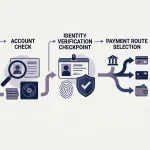
For deposits and withdrawals, start with the cashier rather than the headline claims. Check which payment routes the site accepts, whether the same route can be used to withdraw, and what conditions apply before a payout is released. A method being available for deposits does not, by itself, establish that it will be available for withdrawals. Keep a record of the stated terms and of your transactions; it is easier to spot a mismatch before money is in limbo.
Skrill and Neteller can be relatively quick routes for withdrawals. A specialist casino review reported that most foreign casinos it covered cleared these transactions within 24 hours, with many doing so in under 12 hours. Treat that as a reported timing, not a promise from every operator. The site may have to process a request before the payment provider handles it, so check whether the displayed time refers to the casino’s own review or the full journey to your account.
Bank transfers can take longer. A specialist casino review described them as the slowest route, often taking five to seven business days, with some casinos adding their own processing time before the bank transfer begins. That distinction matters: a payout marked as pending has not necessarily reached your bank. Read the withdrawal page for both the operator’s processing stage and the expected transfer time.
The conditions around a payout are not uniform. A specialist casino review noted considerable differences between operators in withdrawal limits, pending periods and verification procedures. Read those terms before depositing, including any rules that could delay or divide a withdrawal. If the cashier gives little detail, or the payment conditions are difficult to find, that is useful information in itself.
None of this turns speed into security. UKGC-licensed operators sit within the British regulatory system; offshore casinos do not. If an offshore operator delays or refuses a payout, you cannot assume that the UKGC can resolve the dispute or enforce its rules against that business. A fast payment route may reduce waiting when a withdrawal is approved, but it cannot make the approval certain.
I’d judge the route by its full conditions, not by the quickest figure in a review. Before sending money, make sure you understand how deposits are accepted, how withdrawals are requested, what could hold them up, and which regulator licenses the operator. If those details do not line up clearly, keep your money out of the account.
USA casinos for UK players: rules and risks
Games and Security: What the Facts Actually Support
When you look at offshore casino games, the useful question is not how long the lobby appears. It is what you can establish about the operator behind it. A busy page, polished graphics and familiar-looking game tiles do not tell you who supplies the games, how they are tested, or what happens if a dispute arises. I would not treat a large-looking catalogue as proof of quality.
Descriptions of non-GamStop casinos sometimes point to encryption as evidence of security. Encryption can help protect information as it moves between your device and a website, including personal and financial details. That is a worthwhile technical measure, but it answers a narrow question: whether data is protected in transit. It does not, by itself, establish that a game’s results are independently checked, that a casino will honour a withdrawal, or that your complaint has an effective route to resolution.
That distinction matters because offshore operators are outside the UK Gambling Commission’s system. Even if a site describes itself as licensed or regulated offshore, that does not make it UKGC-regulated or give you the same protections as a casino licensed for the British market. Security language is not a substitute for those safeguards. Nor should “safe offshore casinos” be read as a guarantee: a security feature may reduce one kind of risk while leaving other risks untouched.
For UK players, the legal position also has two sides. Playing at an overseas casino is not itself a criminal offence for the customer. But an operator offering gambling to people in Great Britain must hold a UKGC licence; an offshore licence does not authorise it to serve the British market. So a foreign site’s claims about its licence and security should not be mistaken for permission to operate here. The customer is not fined simply for playing, but that does not turn the operator into a locally regulated one.
The same caution applies to claims about game choice. Without clear, verifiable details about the titles and their providers, a list of game categories is little more than window dressing. Look for precise information on the operator’s own site and consider whether it can be checked independently. A logo or a game image alone is not evidence of a relationship with a named supplier. I would rather see a modest, specific claim than a grand catalogue that says nothing about how the games are controlled.
Bonuses are a separate part of the offer; they do not validate the games or the site’s security. And if a payment dispute leads you to consider a chargeback, do not assume that it will settle a disagreement with the casino or restore access to an account. That is not the same as an independent gambling dispute process.
Encryption is useful. It is not a licence, a payout promise or proof that the games are fair. Keep those categories separate.
Bonuses, Wagering and the Cost of a Deposit Offer
An offshore casino bonus can look generous at first glance, but the headline amount is only one part of the offer. A specialist casino review reports that foreign casinos may advertise larger welcome packages because they are not bound by UKGC restrictions on bonus terms, wagering requirements and promotional language. That is a description of the offer, not a reason to assume it is better value.
Bonus Wagering
Calculate match bonus
For a 100% match bonus of £100 with a 35x wagering requirement, the total wagering amount is £3,500.
Calculate small bonus
For a £20 bonus with a 35x wagering requirement, you would need to place £700 in qualifying bets before cashing out.
Common formats include deposit matches, free spins, no-deposit offers and cashback. A no-deposit bonus may sound like money you can simply withdraw, but its terms can still require qualifying bets before any bonus funds become cash you can take out. Read the offer conditions before accepting, and look for which funds the wagering applies to.
The arithmetic is straightforward; the burden can be less so. A specialist review gives the example of a £20 bonus with a 35x wagering requirement: you would need to place £700 in qualifying bets before cashing out. For a 100% match bonus of £100 carrying the same requirement, the stated wagering total is £3,500 before the bonus funds convert to withdrawable cash. Those figures illustrate how a requirement works; they do not tell you whether a particular offer is fair or achievable.
Check the exact wording for what counts as a qualifying bet and whether the requirement applies to the bonus alone or to another amount. The offer’s headline and the amount you must wager are different things. If the terms are unclear, treat that uncertainty as part of the cost, rather than assuming the most favourable interpretation.
There is another difference worth keeping in view: offshore casinos are not regulated by the UK Gambling Commission and are not subject to its affordability checks. A large bonus does not replace those protections. It can instead encourage you to keep playing while you work through the requirement. Not a free gift.
If you are comparing a no-deposit offer with a deposit match, focus on the conditions attached to each, not just the advertised value. The practical question is how much qualifying play stands between accepting the promotion and being able to withdraw. If that answer is difficult to find, you have learned something useful before signing up.
Crypto Withdrawals and Their Trade-Off
Crypto can make a withdrawal look quick on paper. A specialist casino review reports that withdrawals from foreign casinos often clear in under an hour, faster than fiat methods. Treat that as a reported result, not a promise about the next payment you make: the time a particular operator takes can differ, and a published speed does not tell you what will happen if a withdrawal is delayed or disputed.
The other side is volatility. The value of a cryptocurrency can move while you hold it, so the amount you eventually convert into pounds may not match the value you expected when the casino sent it. A quick transfer does not remove that exposure. If you would rather know what your winnings are worth in pounds, crypto may be a poor fit, even when the headline withdrawal time sounds appealing.
There is also a practical distinction between receiving crypto and having spendable pounds. A payment arriving in a crypto wallet is not the same as money reaching your bank account; converting it can involve another step and the value may change before that is done. Think about the currency you are actually willing to hold, not just how quickly a casino says it can send a withdrawal.
And speed is only one part of the risk. Offshore casinos are not regulated by the UK Gambling Commission, and they are not subject to UKGC-mandated affordability checks. A crypto payment route does not change that position or give you the protections attached to a UKGC-licensed operator. Nor does a reported fast payout establish that a site will handle every withdrawal smoothly.
Before depositing, read the operator’s rules for crypto withdrawals and consider whether you are comfortable with both the payment method and the possibility of value changing. Do not deposit money you need for bills or rely on a headline payout time when deciding whether you can afford to gamble. If the exchange-rate risk would bother you, a faster transfer is not much consolation. A quick arrival can still leave you with a different value than expected.
International Casinos for UK Players: What to Know
Verification, KYC and What “No KYC” Leaves Out
“No KYC” can sound like a promise that you will never be asked who you are. Treat it instead as a claim about an operator’s sign-up process, not proof that your account will remain unchecked. Verification procedures vary between offshore casinos, and a low-friction registration does not tell you what may happen when you try to withdraw.
At a UKGC-licensed casino, the operator must verify your identity before processing a withdrawal. Age must also be verified before an operator allows you to deposit. Those requirements are part of the UK regulatory framework; an offshore casino is outside UKGC regulation, so you should not assume it follows the same rules or timetable.
In practice, read the operator’s own terms for what identification it may request and when. A request can come after you have registered, deposited or played, so a “no KYC” label alone cannot tell you whether a withdrawal will be delayed while details are checked. Nor does it tell you how an operator will handle a disagreement about the documents or account. Plainly, the label is not a protection.
There is another important distinction: identity checks are not the same as affordability checks. Offshore casinos are not subject to UKGC affordability checks. That means a claim about avoiding identity paperwork says nothing about safer gambling controls, and it should not be read as an assurance that spending will be assessed.
If you are comparing how offshore casinos work, look past the sign-up headline. Check what the terms say about verification, whether the operator can ask for identification later, and what happens if you do not provide it. A specialist review may describe an operator as “no KYC”, but that wording is not a substitute for the operator’s conditions. And because the site is not regulated by the UK Gambling Commission, UKGC rules do not give you the same framework for addressing a problem. A quick registration can be the easy part. The exit may be less simple.
GamStop and the Limits of Offshore Alternatives
GamStop is designed to block access to every UK Gambling Commission-licensed operator once you register for self-exclusion. That boundary matters: foreign casinos operating outside the Commission’s remit are not covered by the scheme. So an offshore casino is not a reliable extension of your exclusion; it sits outside the safeguard you signed up to use.
A specialist review has reported that someone who has self-excluded may be able to register with a foreign casino and deposit without the protections that apply at UK-licensed sites. That ease of access is precisely the risk, not a useful workaround. If you chose GamStop because gambling was causing harm, moving to a site it cannot reach can undo the practical barrier you put in place.
These casinos are also outside UKGC regulation and do not provide UKGC-mandated affordability checks. The Commission cannot apply its rules to them as if they were licensed operators. A familiar-looking website or a simple sign-up process does not change that.
I would not treat offshore casino alternatives as a way to keep gambling while staying self-excluded. They can make it easier to act on an urge at the moment you were trying to interrupt it. The safer course is to keep the block in place and seek support rather than look for a site beyond its reach. GamStop has a defined scope; it cannot protect you on every gambling website.
That is the limit. If you are struggling to stick to your exclusion, contact a gambling support service or someone you trust before making another deposit. A site outside GamStop is not a safeguard. It is a gap.
Are bonuses at foreign casinos actually better than at UKGC-licensed sites?
Often, foreign casinos offer larger welcome packages and more types of promotions because they are not bound by UKGC restrictions on bonus terms and promotional language. Check the wagering requirement: a £20 bonus with a 35x requirement means £700 in qualifying bets before you can cash out.
How long do withdrawals take at the listed operators?
It depends on the payment method and the operator’s processing procedures. E-wallet withdrawals often take under 24 hours, crypto withdrawals can clear in under an hour, and bank transfers often take five to seven business days; pending periods and verification can add delays.
What happens if I have a dispute with a foreign casino?
You may have fewer ways to resolve it than with a UKGC-licensed casino because the operator is outside the UKGC’s oversight. Some unlicensed sites have refused to pay winnings, leaving customers with no legal recourse.
Are gambling winnings subject to income tax in the United Kingdom?
No. Gambling winnings are not subject to UK income tax, whether the operator is UKGC-licensed or not.
What does a wagering requirement actually mean in practice?
It is the amount you must bet on qualifying games before bonus funds can be withdrawn. For example, a 35x requirement on a £20 bonus means placing £700 in qualifying bets.
Are foreign casinos safe for UK players to use?
There is no guarantee of UK-level protection: foreign casinos are outside UKGC oversight, and some unlicensed sites have refused to pay winnings. A foreign licence does not authorise an operator to offer gambling in England, Scotland or Wales.
Is it legal for UK residents to use casino sites that operate outside the UK’s licensing framework?
A UK resident does not commit a crime simply by betting with an overseas casino. However, an operator without a UKGC licence cannot legally offer online gambling services to customers in England, Scotland or Wales.
Casinos

Anjouan Casino Licence and UK Rules Explained
An Anjouan authorisation is not a substitute for a UK Gambling Commission licence when gambling...

Casino Apps UK: App vs Mobile Browser Play
Learn how app and browser access differ, and what to check when managing money, games,...

Foreign casinos for UK players: licensing explained
A foreign casino may accept British customers without holding a UKGC licence; its terms, payment...

International Casinos for UK Players: What to Know
The guide explains how UKGC licensing differs from offshore status and what to consider when...

Mobile casino deposits by phone credit in the UK
Phone-credit deposits are billed through a mobile account, with the charge handled differently on contract...

Offshore Casinos for UK Players: Rules and Risks
An offshore site may accept British customers without holding the UKGC authorisation required to offer...

British Casinos Not on GamStop: What to Check
GamStop participation is required for UKGC-licensed operators, while sites outside that framework need separate scrutiny....

Casino Sites Not Registered with GamStop in the UK
The label describes exclusion coverage, not a guarantee of licensing, protections, payment options or suitability....

Non-UK Licence Casinos: What the Licence Means
Licensing jurisdiction shapes regulatory oversight, but the label alone does not establish the safeguards or...

Casino no ID verification in the UK: what it means
A quick sign-up does not remove age and identity checks, which may be requested at...

Casino Without a UK Licence: What It Means
A UKGC licence is distinct from an overseas licence, with implications for player protections, payments,...

Casinos That Bypass GamStop: What UK Players Should Know
GamStop applies to UKGC-licensed operators, while casinos outside that network may not offer the same...

Curaçao Casino Licence in the UK: What It Means
A Curaçao label points to a licensing jurisdiction, not necessarily where a casino operates or...

Gibraltar Casino Licence for UK Players: Key Checks
A Gibraltar label does not settle which rules apply; licensing, account terms and support arrangements...

Merkur Casino Online UK: Games, Sites and Checks
Game information, casino listings, bonus terms and payment checks can help distinguish a Merkur title...

How to Assess the Most Trustworthy Online Casinos in the UK
A practical way to assess casino claims, from permission to serve Great Britain to the...

No Account Casino UK: What the Label Means
A practical look at simplified sign-up, player records, UK remote-play rules and the payment and...

No ID Verification Withdrawal Casinos in the UK
UK rules require licensed casinos to check age and identity before gambling, while offshore sites...

Non-Gamban Casinos in the UK: What the Label Means
A site's absence from Gamban's coverage does not establish its safety, licensing or suitability, and...

Non-GamStop Curaçao casino sites: claims explained
This guide distinguishes Curaçao claims from UK licensing requirements and explains limits around self-exclusion, payments...

Non-GamStop European Casinos: UK Exclusion Rules
European branding does not establish a site's UK status; licensing and the scope of a...

Non-UK Registered Casinos: How Regulation Works
A foreign licence is not a UKGC licence; understanding who oversees a casino helps clarify...

Non-UK Regulated Casinos: What UK Players Should Know
The guide distinguishes an operator’s UK permission from an offshore licence and outlines potential differences...

Non-UKGC Licensed Casinos: What UK Players Should Know
A guide to UKGC oversight, offshore licensing, GamStop and the practical differences for people in...

Online Casino Malta MGA Licence in the UK: What It Means
The guide distinguishes Malta’s player-money safeguards from the separate requirement to be authorised for remote...

Online Casino No Registration UK: What It Means
Browser access can make games easy to open, but it does not remove account requirements...

Online Casinos With No Sister Sites in the UK
Learn how ownership and shared platforms can link casino brands, why similar design alone proves...

Online slots not on GamStop: how they work
GamStop applies at UK Gambling Commission-licensed operators; sites beyond that reach do not apply its...

Safe Online Casinos in the UK: Licence Checks
A practical guide to checking a casino’s UKGC status, business details, real-money terms, payment rules...

Online Casino Payouts in the UK: RTP Explained
RTP describes an average across relevant play, not a promise of what an individual session...

Trusted Casinos Not on GamStop UK: What to Check
A practical look at licensing, self-exclusion, payments, bonuses and the checks behind claims made by...

Trusted UK Casinos: How to Check a Licence
A practical guide to verifying operator authorisation and checking how bonuses, payment methods, apps and...

USA casinos for UK players: rules and risks
The guide explains the UK rules for overseas operators and the practical concerns around access,...

VPN-Friendly Casinos in the UK: What to Know
Understand how VPN access relates to casino terms, UK player protections, identity checks and payment...