VPN-Friendly Casinos in the UK: What to Know
 Available in GB

Understand how VPN access relates to casino terms, UK player protections, identity checks and payment and withdrawal conditions.
Table of Contents
- What “VPN-Friendly” Means on a Casino Site
- How to Judge an Offshore Casino’s Terms Before You Play
- VPN Casinos and UK Players: The Legal and Consumer-Protection Trade-Off
- Can You Use a VPN at a UK Casino?
- Crypto Deposits, KYC and the Limits of Anonymity
- Payment and Withdrawal Terms to Check on VPN Casino Sites
- Who Regulates Remote Gambling in Great Britain?
- Bitcoin Withdrawals: What the Timing Can Tell You
- What a VPN Changes—and What It Doesn’t
- When a Casino Says It Allows VPNs, Read the Fine Print
What “VPN-Friendly” Means on a Casino Site
A VPN-friendly casino is one that permits players to reach its site while connected through a virtual private network. The phrase describes the operator’s approach to VPN connections; it is not a type of game, payment method or separate category of casino licence. In plain terms, the site allows that kind of connection rather than treating VPN use as an automatic reason to refuse access.
That definition is deliberately narrow. “VPN-friendly” does not, by itself, tell you which countries the casino accepts players from, what licence it holds, or whether every part of its service is available to every visitor. It also does not tell you what the operator will decide in an individual case. The label is about a connection being allowed, not a promise that every account or circumstance will be treated the same way.
This distinction matters because the phrase can sound broader than it is. A player may see “online casino VPN” or “VPN casino” used as shorthand and assume it describes a particular standard. It does not. The useful question is simply whether the casino permits connections made through a VPN. The answer should be read alongside the operator’s stated jurisdiction and licence, rather than treated as a complete description of the site.
If you’re considering a casino while using a VPN, check its access rules and how withdrawals are handled before you play. This page gives you the available payout-speed information, but it does not confirm whether VPN use is permitted.
1. Chanze
Payout speed: 1-3 business days Chanze has a stated payout speed of 1–3 business days. That’s the available detail to consider when assessing it for this page.
2. WinBeast
Payout speed: 1-3 business days WinBeast has a stated payout speed of 1–3 business days. No VPN policy details are provided here.
3. NightWin
Payout speed: 1-3 business days NightWin’s stated payout speed is 1–3 business days. You’ll need to check its own terms for information about VPN use.
4. NightLuck
Payout speed: 1-3 business days NightLuck has a stated payout speed of 1–3 business days. This is the only specific operator detail available here.
5. Jetsetspins
Payout speed: 1-3 business days Jetsetspins lists a payout speed of 1–3 business days. The available information does not establish whether it allows VPN use.
6. SpinFormula
Payout speed: 1-3 business days SpinFormula has a stated payout speed of 1–3 business days. Check its terms directly if VPN access is important to you.
7. Revery Play
Payout speed: 1-3 business days Revery Play’s stated payout speed is 1–3 business days. No further details are available here to assess its VPN policy.
8. BeOnBet
Payout speed: 1-3 business days BeOnBet has a stated payout speed of 1–3 business days. That is the specific information available for this reference card.
9. EvoSpin
Payout speed: 1-3 business days EvoSpin lists a payout speed of 1–3 business days. You’ll need to consult its terms for any VPN-related conditions.
10. Britsino
Payout speed: 1-3 business days Britsino has a stated payout speed of 1–3 business days. No VPN-use information is provided here.
Where these casinos are commonly licensed
VPN-friendly casinos are mostly offshore operators, with licences commonly associated with Curaçao, the Isle of Man and Malta. These are the jurisdictions readers are most likely to encounter when looking at this kind of casino. The wording “mostly” matters: it describes where such operators are commonly licensed, not a rule that every VPN-friendly site must come from one of those places.
A licence is a separate piece of information from a VPN policy. One tells you about the operator’s licensing jurisdiction; the other describes whether it permits VPN connections. They should not be collapsed into one label. If a site advertises itself as VPN-friendly, that alone does not identify its regulator. You need to look for the jurisdiction and licensing details the operator gives about itself.
For UK readers, the practical distinction is that offshore operators sit outside the UK Gambling Commission system and are not required to follow UK laws as UKGC-licensed operators must. That is worth keeping in view when you encounter a casino licensed in Curaçao, the Isle of Man or Malta. The place named on a licence is not a decorative detail; it tells you which jurisdiction the operator points to for its licensing.
Non-UK Registered Casinos: How Regulation Works
What the label can—and cannot—tell you
The term is useful as a first filter, but not as a verdict. It can indicate that a casino does not automatically bar a VPN connection. It cannot establish, on its own, that the operator accepts players in the UK, that its licence is appropriate for a particular player, or that the operator’s other conditions suit them. Those are separate matters, and the label should not be made to carry more meaning than it has.
I would read “VPN-friendly” as a statement about access, not as an assurance about the whole account relationship. The same phrase can appear beside very different operators and licensing jurisdictions. So, when comparing descriptions, keep the simple definition in mind: the site allows a player to connect through a VPN. Then identify where the operator is licensed. Those two details answer different questions.
There is also a difference between a casino that openly describes itself as VPN-friendly and one where a visitor merely finds that the site loads while using a VPN. A page loading is not the same as a clear statement of policy. If the operator uses the label, check what it actually says it means; if it does not, do not infer a general permission from the wording used by someone else.
That is about as far as the term takes you. It is a handy description, not a quality mark, and the licence jurisdiction remains its own detail. In this corner of online gambling, precise labels help; vague ones do not.
How to Judge an Offshore Casino’s Terms Before You Play
A welcome offer can look generous until you read the condition attached to it: how much wagering must be completed before the bonus, or winnings linked to it, can be withdrawn. That requirement is often the part that changes the value of an offer. I’d read it before looking at the headline amount. A large bonus with demanding conditions may be less useful than a smaller one with clearer terms.
Offshore welcome bonuses are reported with wagering requirements of 30x, 40x or 50x in one specialist review. Other sources put the possible ceiling higher, at 60x. Those accounts disagree, so treat the figures as reports of terms that may appear, not as a standard that every casino follows. The offer in front of you is what matters. Its own rules should state the requirement and explain what it applies to.
Anjouan Casino Licence and UK Rules Explained
Find out what the multiplier applies to
A multiplier on its own does not tell you the full wagering obligation. The terms need to make clear whether the requirement is calculated against the bonus, the deposit, or a combined amount. If the wording does not say, you cannot reliably work out what completing it would involve. Don’t fill in the gap with an assumption that makes the offer seem better.
Look for the calculation in the bonus rules, not just in a short banner or promotional summary. Those two places may present the same offer at different levels of detail. If the summary gives a multiplier but the full terms do not explain its base, that is a real information gap. A bonus is not clearer just because its key condition is printed prominently.
Check, too, whether the requirement applies only to the bonus or to the bonus and deposit together. That distinction changes the amount of wagering attached to the offer. The wording should let you identify the calculation before you accept anything. If it uses unfamiliar terms, take time to understand them or ask the operator to explain them in writing.
Read the rules as a set
A wagering requirement is not the only term that can affect whether an offer suits you. Read the complete bonus rules, including any conditions that define when the offer starts and what counts towards completing it. Pay attention to wording that limits how you may use a bonus or describes circumstances in which it can be removed. A clear headline does not override a condition elsewhere in the rules.
You are not looking for a particular formula that every casino uses. You are checking whether this operator has explained its own formula plainly enough for you to make a decision. If the rules are hard to locate, conflict with the promotion, or leave a central point unanswered, pause rather than guessing. Confusion is not a bargain.
It also helps to separate the offer’s value from your reason for visiting the site. If you would not want to play without the bonus, consider whether its conditions are doing the persuading for you. Wagering requirements can keep an offer in view for longer than its headline deserves. No need to let the banner do the reading.
Do
- Read the complete bonus rules including limitations
- Identify if the multiplier applies to the bonus, deposit, or both
- Compare offers using the same set of questions
Don’t
- Assume a large headline bonus is the best value
- Fill information gaps with assumptions to make an offer seem better
- Rely on a multiplier alone without understanding the calculation
Compare like with like
When you compare offers, use the same questions for each one: what does the multiplier apply to, how is wagering counted, and where are the complete rules? A comparison based only on the advertised bonus amount leaves out the condition that may determine how practical the offer is. A casino described as one of the best VPN-friendly options is not automatically offering terms that suit your plans.
The same goes for crypto-focused promotions. A payment method does not tell you whether a bonus has a low or high wagering requirement, or how the requirement is calculated. Read the promotion itself rather than assuming that a particular kind of casino or deposit makes the bonus simpler. The terms are the useful evidence; the label is not.
If the multiplier is stated but the calculation is unclear, the offer remains difficult to judge. If the calculation is explained, you can decide whether you are willing to meet it. That is a more grounded comparison than ranking offers by their headline figures. It also keeps the decision in your hands: you can decline an offer without treating its size as a reason to accept conditions you have not understood.
Keep a record of what you accepted
Before claiming a bonus, save or note the version of the terms you read, along with the offer description. This gives you a reference if the wording later becomes difficult to find. Check that the rules you have read relate to the specific promotion you intend to claim; general bonus pages may not explain every offer in the same way.
Most importantly, do not proceed on the strength of a multiplier alone. Reports of 30x, 40x and 50x requirements, alongside reports of requirements reaching 60x, show why broad claims are a poor substitute for reading the individual terms. The figures are not a promise about what you will face. The operator’s written conditions should tell you what this particular bonus requires—and if they do not, you have not been given enough to judge it properly.
VPN Casinos and UK Players: The Legal and Consumer-Protection Trade-Off
For a UK resident, two questions tend to get tangled together: whether playing at an offshore casino is a crime, and whether that casino is authorised to serve customers here. They are not the same question.
UK law does not criminalise a resident for gambling online at an offshore casino, and using a VPN for online gambling is not itself a criminal offence. That does not make an offshore site a UK-regulated casino. Operators offering real-money gambling to customers in Great Britain are required to hold a UK Gambling Commission licence; offshore operators without one sit outside that system. The distinction is between the player’s position and the operator’s obligations.
Trusted UK Casinos: How to Check a Licence
So a search for a VPN-friendly casino in the UK can lead to a site that accepts a connection while remaining outside the UKGC framework. A casino allowing VPN access is not, by that fact alone, authorised to offer gambling to people in Great Britain. Nor does the absence of criminal liability for the player turn the arrangement into a UK-regulated service. Those are separate issues, and the small print will not merge them for you.
What protection you give up
The practical trade-off is consumer protection. If you play at an offshore casino that permits VPN connections, you give up the protections that come with using a UKGC-licensed operator. The offshore operator is not regulated by the UKGC and has no obligation to follow UK gambling laws. If there is a dispute over an account or a withdrawal, you cannot treat the UKGC system as the backstop for that offshore account.
That matters most when something goes wrong. A site may have its own complaints process, but that is not the same as the protections available through the UK regulatory framework. You are relying on the operator’s terms and on whatever procedures apply under its own licensing arrangement. A licence from elsewhere does not make it a UKGC licence, and it does not restore UK consumer protections.
I would not read “VPN-friendly” as a stamp of approval. It describes an access policy, not the quality of a site’s dispute handling, the fairness of its decisions, or the security of your balance. The phrase can sound reassuring; it answers a much narrower question.
There is another concrete difference: offshore casinos do not provide GamStop self-exclusion tools. If you use GamStop to block yourself from UKGC-licensed gambling, do not assume that the same exclusion will cover an offshore account. That gap can matter more than the VPN connection itself. A site’s willingness to accept a connection says nothing about whether it offers the safeguards you rely on elsewhere.
Read the terms as a risk, not a promise
A casino’s terms can also set limits on who may play. If its rules exclude UK players, connecting through a VPN does not rewrite those rules. Hiding your location can lead to account closure and confiscation of winnings; where the terms prohibit UK players, an account may be terminated after a win. That is a financial risk, not just an inconvenience.
VPN policies can change without notice, too. A site that allows VPN connections now may alter its approach later, and a previous successful login does not guarantee that a future withdrawal will go smoothly. The permission to connect is not the same as a promise to honour every account or payment. Keep that distinction in view before you put money into an account.
This is why I would separate three things when reading an offshore casino’s terms: whether it accepts players from the UK, whether it permits VPN access, and what it says it can do if it decides those conditions were not met. A vague statement about VPNs does not settle the other points. If the operator’s position on UK customers is unclear, the uncertainty belongs to you once you deposit.
Account Risks
Using a VPN to hide your location when terms prohibit UK players can lead to account closure and confiscation of winnings.
None of this means that every offshore account will end in a dispute, or that a player will face criminal prosecution simply for using one. It means the legal and practical positions are different: the player is not criminalised for playing offshore or using a VPN, while the operator remains outside the UKGC system and the player loses UK consumer protections. That is the trade-off to weigh, rather than assuming that access equals approval.
If you are comparing a VPN casino with a UKGC-licensed site, do not treat the two as interchangeable just because both offer online games. The offshore option may allow a connection that a UKGC operator blocks, but it does not bring the UK protections with it. Less cover.
Can You Use a VPN at a UK Casino?
A VPN can change the IP address a casino sees, but that does not mean you can use one to play at a UKGC-licensed casino. Most UKGC-licensed operators block VPN connections, so you may find that the site will not load properly or that you cannot access your account while connected.
There is a practical reason for this. A UKGC-licensed operator must verify where a player is located. An IP address is one signal, and a VPN can make that signal point somewhere other than your actual connection. The operator may therefore block access rather than treat the changed address as proof that you are somewhere else.
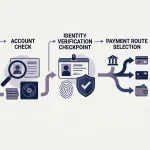
That check is separate from KYC. KYC is the operator’s process for verifying your identity; changing your IP address does not complete it, replace it or make the location requirement disappear. Even if a VPN connection gets you as far as the site, it does not settle what the operator needs to verify before you can play.
Why a connection may fail
The simplest outcome is a connection block. You might also find that the site behaves differently when the VPN is on than when it is off. That does not mean switching networks has solved the problem: it means the casino is seeing a connection it may not accept.
It is tempting to treat this as a technical nuisance and keep trying different settings. I would not. An IP address is not a permission slip, and a successful page load does not establish that the operator has accepted your location or completed its checks.
If you choose to use a VPN for any online activity, keep it active throughout that session rather than switching it on and off mid-session. That is not a way to make VPN use acceptable at a UKGC-licensed casino, nor does it override the operator’s location checks. The key point is simpler: the casino may block the connection, and changing the IP does not change the separate verification process.
Should you turn it on before playing?
For a UKGC-licensed casino, do not assume a VPN will work or that you can use it without access problems. Most operators block VPN connections, and they are required to check player location. Turning a VPN off may resolve a connection issue, but it does not itself complete any outstanding identity or location checks.
Non-UK Regulated Casinos: What UK Players Should Know
If you are already having trouble accessing an account, avoid treating repeated VPN changes as a workaround. Check the operator’s own instructions or contact its support team about the connection. The account and the verification process are the operator’s to manage; an altered IP address cannot answer questions about your identity.
So, can you play at a UK casino with a VPN? A VPN may change what IP address the site receives, but UKGC-licensed operators commonly block those connections, and location verification remains a separate requirement. For practical purposes, do not rely on a VPN to access a UKGC-licensed casino. The connection can be refused, and changing the address does not make the checks go away.
Crypto Deposits, KYC and the Limits of Anonymity
Crypto can make the first step feel less revealing: at some offshore casinos, a small deposit may involve fewer location checks and less KYC friction. That can be useful to understand if you are comparing payment options, but it is not the same as opening an account anonymously. A lighter check at the deposit stage does not mean the casino has no information about you, or that it will never ask for more.
The distinction matters because a payment method is only one part of the account relationship. Casinos can still collect device fingerprints, IP logs and browser data. Those records can connect activity on the site with the device and connection used to access it. Paying in crypto does not remove that trail.
I would read any claim of “anonymous” play with care. It may describe how a deposit is made, rather than what the operator can observe across a session or what it may request later. Even when a small crypto payment passes with limited checks, that says little about what happens if the account is reviewed. The useful question is not whether crypto avoids every check; it is what checks the casino says it carries out, and at which points.
A crypto casino used through a VPN can therefore offer fewer checks around a small deposit without making the player invisible. The two features do not cancel out the information the operator gathers. In particular, the casino may still record connection and browser details while accepting a crypto payment. “Crypto” and “VPN-friendly” are not synonyms for “untraceable”.
Before depositing, look for clear terms about identity verification and account reviews. If the wording suggests that no documents will ever be required, treat that as a claim to verify rather than a guarantee. The operator’s policy matters more than the impression created by a payment button or a short sign-up flow. Keep in mind, too, that a site’s willingness to accept a VPN connection does not by itself explain what information it collects.
There is a practical limit here: reducing friction is not the same as removing scrutiny. Crypto may mean fewer location checks for a small deposit, but it cannot promise that the casino will not link account activity through the data it records. Nor should a smooth first transaction be taken as evidence that every later account interaction will be treated the same way.
Crypto and VPN-friendly labels are not synonyms for being untraceable, as casinos can still collect device fingerprints, IP logs, and browser data.
So, if you are considering a VPN-friendly crypto casino, think of crypto as a payment option, not a privacy shield. Check the operator’s stated verification policy before sending funds, and do not assume that a modest deposit settles the question of identity checks. Less friction at the start, perhaps. Anonymity, no.
Payment and Withdrawal Terms to Check on VPN Casino Sites
A payment page can look straightforward until you try to take money out. Before depositing at a VPN-friendly casino, compare the withdrawal rules with the payment methods actually available to you. The key details are the stated processing time, any withdrawal limits, and whether the casino’s terms say that a method can be used for both deposits and withdrawals.
A specialist review of VPN-friendly casinos gives a window of one to five days for fiat withdrawals by e-wallet or bank transfer. Treat that as a reported estimate, not a standard promised by every operator: payment pages and policies can change, and the casino’s own terms are what matter for your account. Check whether the listed period refers to the casino processing the request or to the full time before funds reach you. Those are not necessarily the same stage.
E-wallets are described as taking about a day for withdrawals at VPN-friendly casinos. That is a useful point of comparison when you read an operator’s published estimate, but do not assume the same timing applies across sites. Look for the exact wording on the cashier or withdrawal page, and note whether it qualifies the estimate or makes it conditional. A short estimate is only useful if the terms explain what happens when a request needs additional review.
Bank cards are reported as rare at VPN-friendly casinos in a specialist review. If you prefer to withdraw to a card, confirm that the casino currently supports it rather than relying on a general payment-method logo or an old review. A logo may indicate that a payment method is accepted in some context; it does not, by itself, establish that it is available for withdrawals.
Before you deposit, check the withdrawal ceiling and any other limits attached to the method you plan to use. A low ceiling can affect how you access winnings even when the advertised processing time looks acceptable. Read the cashier information alongside the withdrawal terms, since a method shown during deposit may not be presented in the same way when you request a payout.
It is also worth checking whether the operator can change its payment options or VPN policy. Offshore casinos may revise VPN rules without notice, so a site that accepted your connection earlier is not necessarily promising the same access later. Keep a copy of the relevant terms as they appear when you deposit; it gives you something specific to compare if the cashier details later differ.
I would not choose a payment method on speed alone. First make sure the site states a usable withdrawal route and clear limits; then compare its published timing with what a specialist review reports. For a VPN casino site, that small check can prevent a familiar disappointment: the deposit button works, but the payout route is vague. No guesswork needed.
Who Regulates Remote Gambling in Great Britain?
The UK Gambling Commission oversees commercial gambling in Great Britain, including online casino services. It is the central regulator for this market, rather than one of several bodies sharing responsibility for commercial gambling. Its remit covers remote gambling offered to people in Great Britain even when the operator’s key equipment is located elsewhere.
That distinction matters when you are trying to work out which rules apply to an online casino. The location of a website’s servers does not, by itself, take a service outside the Commission’s reach if it is offering remote gambling to consumers in Great Britain. The regulator’s role is tied to the market being served, not simply to the place where the technology sits.
Licensing is part of that oversight. The Commission grants operating licences to gambling businesses and personal licences to individuals who work in regulated roles. These are different permissions: one authorises a business to provide gambling services, while the other applies to people carrying out relevant functions. A licence is therefore not just a badge attached to a website; it sits within a system that covers both the operator and certain people involved in running gambling businesses.
This also helps put questions about VPN use into context. Whether an online casino permits a VPN connection is a matter of that operator’s access policy; the Commission’s role is to regulate gambling activity and licensing in Great Britain. The two issues are related, but they are not interchangeable. A connection method does not determine who regulates a commercial gambling service.
Non-UK Licence Casinos: What the Licence Means
When you are checking a casino’s status, focus first on whether the business has the appropriate operating licence for the service it offers. For a person working in a regulated role, the relevant permission may instead be a personal licence. Different job, different licence.
Bitcoin Withdrawals: What the Timing Can Tell You
For a Bitcoin withdrawal at a VPN-friendly casino, a specialist review reports processing within minutes to a few hours. Treat that as a reported window, not a promise that every request will reach your wallet on the same schedule. It describes what one kind of source has observed or stated, not a fixed standard across operators.
That distinction matters when you compare a casino’s own payment terms with claims elsewhere. The operator’s terms should explain how it handles a withdrawal request and what status updates you can expect. If the wording is vague, the review’s timing gives you a point to ask about, not a guarantee to rely on. “Fast” is not a timetable.
Bitcoin can make a withdrawal feel straightforward because the payment is made in cryptocurrency, but the word itself does not tell you how quickly the casino will process your request. The reported window is useful as a rough reference only when you know exactly what it covers. A casino may describe its own processing stage, while a review may summarise the overall experience; those are not necessarily identical measures.
Before treating a quick payout claim as meaningful, look for a clear explanation of when the clock starts and what the casino considers completion. If the site gives no definite answer, assume the published claim leaves room for uncertainty. Keep the distinction in mind: a reported time can help you frame expectations, but it cannot settle how a particular withdrawal will go.
I would read minutes to a few hours as a sign that the review describes a relatively short processing window, not as evidence that Bitcoin cash-outs are guaranteed to be immediate. Check the wording attached to the claim and compare it with the operator’s own terms. Small print matters.
What a VPN Changes—and What It Doesn’t
A VPN changes the route your internet traffic takes. Instead of connecting directly from your device to a website, your connection passes through a VPN server. The site sees the server’s IP address rather than the one assigned to you by your internet service provider. If that server is outside the UK, the connection can also get around access restrictions imposed by UK providers.
That can make a casino page load when it would otherwise be blocked. It does not change the underlying account or the terms attached to it. A different IP address is a change to the connection, not a permission slip.
There is a privacy benefit, too. A VPN encrypts the connection, making the traffic harder for hackers or cybercriminals to read if they intercept it. I think of it as protection for data travelling between your device and the VPN server—not a cloak that makes every part of an online session private.
The distinction matters. A VPN can mask your IP from your provider and encrypt your traffic, but it cannot control what information a website collects once you connect to it. Nor does the fact that a casino is reachable through a VPN tell you what its own rules say.
So, when someone asks whether a casino VPN “works”, the useful answer is narrow: it can alter how a site is reached and protect the connection in transit. That is all. The rest depends on the casino’s terms and checks.
When a Casino Says It Allows VPNs, Read the Fine Print
“VPN-friendly” can describe the connection, not the whole account. A casino may let you reach its site through a VPN yet still ask for identity documents before releasing a withdrawal. That distinction tends to matter most when you move from playing to cashing out.
Some offshore casinos let small withdrawals pass without documents, then require KYC once a larger withdrawal crosses a threshold, often £1,000 or the equivalent in crypto. So a smooth sign-up and an accepted deposit do not tell you what will happen when you request your money. Check the withdrawal and verification terms before depositing, including what documents may be requested and when.
Also read the eligibility wording carefully. Permission to connect through a VPN is not proof that the casino accepts UK players. If its terms exclude people in the UK, playing from here may lead to account closure after a win, with winnings at risk. Using a VPN to hide your location can also result in account closure and confiscation of winnings.
Policies can change without notice, too. A site that accepts a VPN connection today may alter its rules later, and a connection alone does not guarantee that a withdrawal will be approved without checks. Keep the key point in mind: VPN access and withdrawal approval are separate matters. The small print decides.
Are VPN-friendly casinos legal for UK players?
Yes, UK residents are not breaking the law simply by playing at an offshore casino, and using a VPN to gamble online is not criminalised. However, playing at an offshore casino means giving up UK consumer protections, and these casinos do not provide GamStop self-exclusion.
Can I use a VPN to play at online casinos in the UK?
You can use a VPN, and doing so is not criminalised by UK law, but most UKGC-licensed casinos block VPN connections. An offshore casino may allow them, but you will not have UK consumer protections.
Do VPN-friendly casinos accept cryptocurrencies?
Some do: crypto deposits and withdrawals are used at VPN-friendly casinos. Crypto may reduce location checks and KYC friction for small amounts, but it does not prevent casinos from collecting device, IP and browser data.
Do VPN-friendly casinos pay out winnings?
Withdrawals may be made by e-wallet, bank transfer or cryptocurrency, though bank card withdrawals are rare. Casinos may require KYC documents after a larger withdrawal threshold, often £1,000 or its crypto equivalent.
How do I withdraw winnings from a VPN casino?
You can typically withdraw by e-wallet, bank transfer or cryptocurrency. Fiat withdrawals take 1–5 days, e-wallet withdrawals about a day, and crypto withdrawals from minutes to a few hours; KYC may be required, particularly for larger withdrawals.
Why do UK players use VPNs for casinos?
A VPN can mask your IP address and connect through a network outside the UK, which may bypass access restrictions imposed by internet service providers. It also encrypts your connection and can help protect personal information from hackers or cybercriminals.
Casinos

Anjouan Casino Licence and UK Rules Explained
An Anjouan authorisation is not a substitute for a UK Gambling Commission licence when gambling...

Casino Apps UK: App vs Mobile Browser Play
Learn how app and browser access differ, and what to check when managing money, games,...

Foreign casinos for UK players: licensing explained
A foreign casino may accept British customers without holding a UKGC licence; its terms, payment...

International Casinos for UK Players: What to Know
The guide explains how UKGC licensing differs from offshore status and what to consider when...

Mobile casino deposits by phone credit in the UK
Phone-credit deposits are billed through a mobile account, with the charge handled differently on contract...

Offshore casino sites for UK players: what to know
A guide to licensing, payments, verification and the limits of offshore casino comparisons for UK...

Offshore Casinos for UK Players: Rules and Risks
An offshore site may accept British customers without holding the UKGC authorisation required to offer...

British Casinos Not on GamStop: What to Check
GamStop participation is required for UKGC-licensed operators, while sites outside that framework need separate scrutiny....

Casino Sites Not Registered with GamStop in the UK
The label describes exclusion coverage, not a guarantee of licensing, protections, payment options or suitability....

Non-UK Licence Casinos: What the Licence Means
Licensing jurisdiction shapes regulatory oversight, but the label alone does not establish the safeguards or...

Casino no ID verification in the UK: what it means
A quick sign-up does not remove age and identity checks, which may be requested at...

Casino Without a UK Licence: What It Means
A UKGC licence is distinct from an overseas licence, with implications for player protections, payments,...

Casinos That Bypass GamStop: What UK Players Should Know
GamStop applies to UKGC-licensed operators, while casinos outside that network may not offer the same...

Curaçao Casino Licence in the UK: What It Means
A Curaçao label points to a licensing jurisdiction, not necessarily where a casino operates or...

Gibraltar Casino Licence for UK Players: Key Checks
A Gibraltar label does not settle which rules apply; licensing, account terms and support arrangements...

Merkur Casino Online UK: Games, Sites and Checks
Game information, casino listings, bonus terms and payment checks can help distinguish a Merkur title...

How to Assess the Most Trustworthy Online Casinos in the UK
A practical way to assess casino claims, from permission to serve Great Britain to the...

No Account Casino UK: What the Label Means
A practical look at simplified sign-up, player records, UK remote-play rules and the payment and...

No ID Verification Withdrawal Casinos in the UK
UK rules require licensed casinos to check age and identity before gambling, while offshore sites...

Non-Gamban Casinos in the UK: What the Label Means
A site's absence from Gamban's coverage does not establish its safety, licensing or suitability, and...

Non-GamStop Curaçao casino sites: claims explained
This guide distinguishes Curaçao claims from UK licensing requirements and explains limits around self-exclusion, payments...

Non-GamStop European Casinos: UK Exclusion Rules
European branding does not establish a site's UK status; licensing and the scope of a...

Non-UK Registered Casinos: How Regulation Works
A foreign licence is not a UKGC licence; understanding who oversees a casino helps clarify...

Non-UK Regulated Casinos: What UK Players Should Know
The guide distinguishes an operator’s UK permission from an offshore licence and outlines potential differences...

Non-UKGC Licensed Casinos: What UK Players Should Know
A guide to UKGC oversight, offshore licensing, GamStop and the practical differences for people in...

Online Casino Malta MGA Licence in the UK: What It Means
The guide distinguishes Malta’s player-money safeguards from the separate requirement to be authorised for remote...

Online Casino No Registration UK: What It Means
Browser access can make games easy to open, but it does not remove account requirements...

Online Casinos With No Sister Sites in the UK
Learn how ownership and shared platforms can link casino brands, why similar design alone proves...

Online slots not on GamStop: how they work
GamStop applies at UK Gambling Commission-licensed operators; sites beyond that reach do not apply its...

Safe Online Casinos in the UK: Licence Checks
A practical guide to checking a casino’s UKGC status, business details, real-money terms, payment rules...

Online Casino Payouts in the UK: RTP Explained
RTP describes an average across relevant play, not a promise of what an individual session...

Trusted Casinos Not on GamStop UK: What to Check
A practical look at licensing, self-exclusion, payments, bonuses and the checks behind claims made by...

Trusted UK Casinos: How to Check a Licence
A practical guide to verifying operator authorisation and checking how bonuses, payment methods, apps and...

USA casinos for UK players: rules and risks
The guide explains the UK rules for overseas operators and the practical concerns around access,...