How to Assess the Most Trustworthy Online Casinos in the UK
 Available in GB

A practical way to assess casino claims, from permission to serve Great Britain to the conditions behind real-money play.
Table of Contents
- What Trust Looks Like in a UK Casino
- The Checks I’d Make Before Playing
- Why “Not on GAMSTOP” Needs a Closer Look
- Real-Money Play: Check the Terms, Not Just the Offer
- Slots and the Limits You’ll Meet
- Bitcoin Claims and the Licence Check
- Choosing Without a “Best Casino” Promise
- What a Casino Review Can—and Can’t—Prove
- Are Online Casinos Trustworthy Across the UK?
- Before Your First Deposit: Verification and Withdrawals
What Trust Looks Like in a UK Casino
When I’m judging whether an online casino deserves trust, I start with a plain question: does the operator hold the relevant UKGC Licence to serve customers in Great Britain? It’s the baseline, not a finishing touch. A polished website, familiar games or confident promises cannot take its place.
The point is that the rules follow the market being served, not the address of the business. A remote gambling operator offering facilities to people in Great Britain needs the relevant UK Gambling Commission licence wherever that operator is based. A business does not become exempt simply by running its website from overseas. If it is offering remote gambling to customers here, the licence requirement still applies.
That gives you a useful way to read claims about a casino. “Based abroad” is not, by itself, proof that the operator is untrustworthy; nor is it an excuse for serving British customers without the required licence. The question is whether the operator has permission to offer gambling in this market. Geography can make a company sound distant or established, but neither impression answers that question.
When you’re choosing an online casino, clear information about withdrawals can help you assess what to expect. This list gives you the stated payout speed for each operator.
1. Chanze
Payout speed: 1-3 business days Chanze is listed with a stated payout speed of 1–3 business days.
2. WinBeast
Payout speed: 1-3 business days WinBeast is listed with a stated payout speed of 1–3 business days.
3. NightWin
Payout speed: 1-3 business days NightWin is listed with a stated payout speed of 1–3 business days.
4. NightLuck
Payout speed: 1-3 business days NightLuck is listed with a stated payout speed of 1–3 business days.
5. Jetsetspins
Payout speed: 1-3 business days Jetsetspins is listed with a stated payout speed of 1–3 business days.
6. SpinFormula
Payout speed: 1-3 business days SpinFormula is listed with a stated payout speed of 1–3 business days.
7. Revery Play
Payout speed: 1-3 business days Revery Play is listed with a stated payout speed of 1–3 business days.
8. BeOnBet
Payout speed: 1-3 business days BeOnBet is listed with a stated payout speed of 1–3 business days.
9. EvoSpin
Payout speed: 1-3 business days EvoSpin is listed with a stated payout speed of 1–3 business days.
10. Britsino
Payout speed: 1-3 business days Britsino is listed with a stated payout speed of 1–3 business days.
I’d treat the licence as a threshold. If an operator does not meet it, I would not describe its casino as trustworthy for a customer in Great Britain. If it does meet it, that is an important starting point—but not a personal guarantee that every experience will be smooth or that every decision the business makes will suit you. Regulation sets a framework for operators. It does not remove the need to think clearly about where you choose to play.
That distinction matters because “trust” can mean several things at once. You might mean that a casino is legally allowed to serve you, that it is accountable within the relevant system, or simply that you feel comfortable using it. The licence speaks directly to the first of those and provides a proper regulatory starting point. It should not be stretched into a promise about every feature, offer or outcome. No licence can make gambling risk-free.
I’ve found it helpful to separate evidence from atmosphere. A smart design may make a site feel established. A large logo or a confident line about being a leading casino may sound reassuring. Those things are presentation. The licence requirement is a concrete condition for remote gambling businesses serving Great Britain. Start there, then assess the other details in their own right rather than letting the site’s tone do the work.
The same principle applies when a company’s registered or operating base is outside the country. The relevant issue is not whether the business has a local office or a familiar name; it is whether it holds the licence required for offering remote gambling to consumers in Great Britain. The Gambling Commission regulates remote gambling offered to those consumers. That makes the intended market the key part of the test.
This is a narrower and more useful idea than trying to identify one universally “most trustworthy” online casino. Trust is not a badge you can infer from a headline. For a British customer, the first dividing line is whether the operator is properly licensed for this market. From there, you can consider what matters to you, without confusing a reassuring appearance with regulatory standing.
Safe Online Casinos in the UK: Licence Checks
I would also avoid treating the word “UK” in a brand or web address as evidence on its own. A name can suggest a connection to Britain; it cannot establish that the operator has the required permission. The same goes for a site that says it welcomes British players. A welcome message is not a licence. The regulatory test remains the operator’s authorisation to offer remote gambling here.
So, if you are looking for a trustworthy casino online, keep the first test simple: does the business hold the relevant UKGC Licence for serving Great Britain? If the answer is unclear, don’t fill the gap with assumptions about the company’s location or how professional the site looks. Trust starts with the right permission. Everything else is a separate judgement.
The Checks I’d Make Before Playing
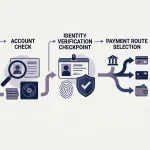
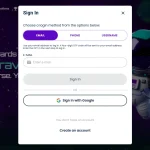
I’d start with the account-opening screen, not a welcome banner. Before you can deposit or play, the operator has to verify you. That is a basic part of opening an account in Britain, not an optional check that can be postponed until you decide to withdraw. If a site appears ready to take your money before completing verification, stop there.
If a site appears ready to take your money before completing your identity verification, stop there.
The order matters. You should be asked to provide the information needed to establish who you are before you reach the point of funding an account or starting a game. Read each screen rather than clicking through on autopilot. If a request is unclear, or the site’s explanation does not match what it is asking you to do, pause and contact its support team before going further.
That first interaction tells you something useful about the operator’s approach. Is the process explained plainly? Can you find out what information is being requested and how to get help? Are you being pushed towards a deposit while important account steps remain unresolved? None of these details alone proves that a casino is trustworthy, but a confusing or contradictory process is a good reason not to proceed.
I’d also pay attention to how the site handles the basics before money changes hands. Account terms and privacy information should be available to read, not hidden behind an unexplained button or a string of promotional messages. You should be able to understand what you are agreeing to and how to reach customer support. If the only clear part of the page is the deposit prompt, that is not a reassuring start.
A trustworthy operator should not make you guess what happens next. If verification is still pending, the account should not invite you to deposit or play as though the check has already been completed. If you cannot tell whether the account is ready, ask support directly. Keep the answer in writing where possible, so you can refer back to what you were told.
No Account Casino UK: What the Label Means
There is another useful checkpoint before your first deposit: the operator must prompt new customers to set a financial limit. Take that prompt seriously. The account should also give you accessible controls for managing your limits later, rather than making you hunt through menus. I’d look for those controls while setting up the account, not after a session has started. Reducing a limit applies immediately; increasing one involves a cooling-off delay. That difference is worth understanding before you choose a figure.
Age checks are part of the same early-stage process. Operators must verify a customer’s age before allowing them to deposit funds. If you are being invited to fund an account without that check, do not treat it as a shortcut or a favour. It is a reason to stop and seek clarification.
I would not confuse a smooth sign-up with a trustworthy one. A site can make registration easy while still leaving basic questions unanswered. The point is not to look for the fewest clicks; it is to see whether the steps that protect the account are clear and happen at the right time. A careful process may involve an extra pause. That is not automatically a flaw.
Nor would I treat a frustrating check as proof of wrongdoing by itself. An operator may need to resolve an issue before letting you use the account. What matters is whether it explains what is outstanding and gives you a sensible way to get an answer. If responses are vague, inconsistent or simply absent, I would not put money into the account while the uncertainty remains.
Do
- Complete all required checks before depositing
- Locate account controls during setup
- Keep support answers in writing
Don’t
- Click through registration on autopilot
- Deposit while verification is pending
- Let a bonus hurry you past account problems
For me, the first-session test is simple: can you complete the required checks before depositing or playing, understand the account prompts, and locate the controls you may need? If not, don’t let a tempting offer hurry you past the problem. You can close the page and reconsider later. No bonus is worth guessing about the state of your account.
These checks will not tell you everything about an operator, and they are not a substitute for checking the relevant UKGC Licence. They do help you spot trouble at the moment it matters: before you have deposited, played or started trying to resolve an account issue. If the process is clear and the required steps come first, you can make the next decision with your eyes open.
Why “Not on GAMSTOP” Needs a Closer Look
“Not on GAMSTOP” can sound like a simple feature: a casino outside a particular scheme, with more choice for the player. I’d read it differently. For someone in Great Britain, it is a reason to pause and ask whether the operator fits the protections of the local gambling system at all.
GAMSTOP is the national self-exclusion service used by online gambling operators in the UK Gambling Commission’s Great Britain regime. Participation became compulsory on 31 March 2020. That means a casino cannot present itself as a compliant Great Britain operator while treating GAMSTOP as an optional extra. If a site promotes itself as outside the scheme, that description sits uneasily with the rules governing licensed remote operators here.
Merkur Casino Online UK: Games, Sites and Checks
The key point is not whether a website has a familiar name, polished pages or a long list of games. Remote gambling businesses offering facilities to customers in Great Britain need the relevant UKGC Licence wherever the business is based. A company being registered abroad does not remove that requirement when it serves this market. Nor does a confident claim about being “trusted” settle the question. Check what the operator is authorised to do, rather than letting its own label do the work.
I would also separate two ideas that can get muddled. A person may search for a casino that is not connected to GAMSTOP because they want to avoid a self-exclusion already in place. That is not a safer way to choose where to play. Self-exclusion is there to create a barrier when gambling has become difficult to control; looking for a way around it can weaken the protection at the moment it matters most. A site’s willingness to attract people for that reason is not a mark of trustworthiness.
If you have self-excluded and feel pulled towards gambling again, take a beat before opening another account. You can contact the National Gambling Helpline, available around the clock on 0808 8020 133. You do not need to solve the whole problem in one conversation. Start with the next step.
There is a narrower possibility: a person may simply be trying to understand a site’s marketing claim, not bypass an exclusion. Even then, the same basic test applies. Does the operator hold the relevant UKGC Licence for offering remote gambling to customers in Great Britain, and does its status make sense alongside its claim about GAMSTOP? If the answers do not line up, do not treat the mismatch as a harmless technicality. It is a warning that the site may not belong to the regulated system you expect.
Warning
Searching for a casino that is not connected to GAMSTOP to avoid an existing self-exclusion is not a safer way to play and can weaken your protection.
The phrase “trustworthy non-GAMSTOP casino” suggests that trust can be judged independently of the scheme. In this market, that framing misses the point. GAMSTOP participation is part of the requirements for operators in the Great Britain regime, not a badge that a casino can choose to display or omit according to preference. A site outside that regime does not gain credibility simply by describing itself as an alternative.
I would not use the phrase as a shortcut to a recommendation, either. A site may say it is safe, reliable or established; those are claims, not proof that it is authorised to serve players here. Keep the distinction plain: a casino’s promotional wording tells you what it wants you to believe, while its regulatory position determines whether it fits the Great Britain framework. No clever wording changes that.
If “not on GAMSTOP” is the main selling point, I would stop there and reconsider. The question is not how to find a way around the scheme. It is whether the operator meets the standards that apply to gambling businesses serving Great Britain. Don’t blur those two things.
Real-Money Play: Check the Terms, Not Just the Offer
A bonus can look generous on the banner and much less useful once you read the conditions attached to it. I’d treat the offer as a set of rules to understand, not as extra cash already sitting in my account. The key questions are what you must wager, which games count, when the offer expires and what happens if you opt out or withdraw early.
Casino Without a UK Licence: What It Means
Start with the wagering requirement and check what it applies to: the bonus, your deposit, or both. Those are different calculations. A specialist review gives one clear illustration: a £20 bonus with 10x wagering means £200 in total stakes before the requirement is met. That is turnover, not a promise that you will finish with £200 or be able to withdraw that amount. Wagering involves repeated play, and the balance can change along the way.
Then look at contribution rules. If some games count less towards wagering than others, the headline multiplier alone won’t tell you how much play is required in practice. Check whether the terms specify eligible games and whether a particular game or category is excluded. Don’t assume that a game you enjoy will count fully just because it appears in the casino’s lobby. The small print is where the calculation lives.
Pay attention to the clock, too. Find the expiry date for both the bonus and any associated free spins, and check what happens to unused funds when time runs out. Look for rules about maximum stakes while a bonus is active, as well as any restrictions on withdrawing before completing the wagering requirement. A condition that changes how you can play or access your balance matters more than the banner’s wording.
Bonus Calculation
Identify the requirement
Check the wagering requirement; for example, a £20 bonus with 10x wagering.
Calculate total stakes
Multiply the bonus by the requirement to find the total turnover needed (e.g., £20 × 10 = £200).
Verify eligible play
Check the contribution rules to see which games count fully towards that turnover and which are excluded.
I also check whether accepting the promotion is optional and how to decline it. You may prefer to play without bonus conditions, or to avoid promotional messages altogether. Casinos must give customers more control over the types of promotions they receive and the channels used to send them. When setting preferences, read the choices rather than clicking through by habit. Offers and marketing messages are related, but they are not the same thing: make sure you understand what you are accepting and what communications you want.
Keep a copy or screenshot of the terms shown when you opt in. If the offer page is brief, follow the link to the full rules before accepting. Look for the operator’s explanation of how to turn a promotion off, what happens to a bonus balance after opting out, and how to contact support if the account display does not match the stated conditions. Don’t rely on a banner or a chat summary where the detailed terms are available.
My practical test is simple: can I explain the wagering calculation, the eligible play, the deadline and the consequence of cancelling? If not, I would leave the offer alone until I could. A promotion should be understandable before you commit, not decoded afterwards. That matters whether you are comparing a trustworthy real-money casino or deciding to play without a bonus at all. The offer is optional; the conditions are not.
Slots and the Limits You’ll Meet
The stake limit for an online slot depends on your age. If you are 25 or older, the maximum is £5 per spin. If you are aged 18 to 24, it is £2 per spin. These are caps, not recommended stakes: you can choose to play for less.
Online Casino Payouts in the UK: RTP Explained
The age split is easy to overlook when you are comparing slots or setting up a session. A game may display several stake options, but the option you can select must stay within the limit that applies to you. If the amount shown is higher, do not treat it as a harmless settings quirk. Stop and check what you are being offered before playing.
I’d also keep the limit separate from the question of whether a slot feels fair. A stake cap says how much you may risk on a spin; it does not tell you whether a particular game suits your budget, how long a session will last, or what you might win. There is no safe stake that turns a slot into a reliable way to make money. The cap is a boundary, not a promise.
When you open a game, take a moment to look at the selected stake before you spin. If you change the stake, check the displayed amount again. That small pause helps avoid playing at a level you did not intend, particularly when the game presents multiple buttons or settings. A trustworthy online slots experience should make the amount at risk clear, not leave you guessing.
The age-based limits also mean that advice from someone in a different age group may not apply to you. A friend aged 25 or over can face a different maximum from someone aged 18 to 24. Don’t assume that a stake they can select will be available to you, or that a displayed maximum is an appropriate amount to play.
Stake Limits
The maximum stake for online slots is £5 per spin for players aged 25 or older, and £2 per spin for those aged 18 to 24.
I’d treat any slot that appears to let you exceed your applicable cap as a reason to pause rather than a feature to work around. The limit is there regardless of the game’s theme or how small a spin may look on screen. Keep your chosen stake within your age band, and make the decision before the session gathers pace. No clever workaround.
Bitcoin Claims and the Licence Check
A casino’s Bitcoin branding tells you something about the payment claim; it does not establish that the operator is trustworthy. I’d treat “Bitcoin accepted” as a detail to verify, not a reason to move an operator up my list. The first question is still whether it has the right to offer remote gambling to customers in Great Britain.
That rule applies whether the business is based here or abroad. If an operator offers gambling facilities to people in Great Britain, it needs the relevant UK Gambling Commission licence. A foreign address, a familiar-looking site or a polished explanation of how Bitcoin works does not replace that requirement.
When a site promotes Bitcoin, pin down what it actually means. Is the payment option available for your account, and what do the operator’s own terms say about using it? Do not assume that a payment method mentioned in a banner is available for every transaction or customer. Read the relevant payment terms directly, rather than relying on a short promotional claim.
Then make the licence check independently. Search for the operator on the UK Gambling Commission’s public register and compare the listed business and domain with the site you intend to use. A brand name and the licensed company behind it may not be identical, so check that the connection is clear. If you cannot establish that the site belongs to the licensed operator, pause. Bitcoin does not make that gap less important.
Offshore casino sites for UK players: what to know
I would also separate two decisions that are easy to muddle: whether the operator is authorised for Great Britain, and whether its stated payment arrangements suit you. The licence check comes first. A payment option can be convenient for one person and unsuitable for another; that does not change the operator’s regulatory status.
If the operator cannot be matched to a relevant UKGC Licence, don’t treat a Bitcoin payment page as a substitute for one. Nor would I use claims about privacy, speed or convenience as evidence of trust. Those claims answer different questions. For a trustworthy Bitcoin casino, the useful starting point is not the coin in the headline; it is whether the business is licensed to serve the market.
That is the order I’d follow: establish the operator behind the site, confirm its status on the register, then decide whether the payment terms make sense for you. No payment label can do that work for you.
Choosing Without a “Best Casino” Promise
I wouldn’t call one casino the best for everyone. A name at the top of a list tells you little on its own; what matters is whether the details behind that recommendation stand up when you check them.
Start with the operator and the website address, not just the brand name. The Gambling Commission’s public register lets you compare an operator’s account details with the domain it uses for customers in Great Britain. In a register check, leovegas.co.uk appears as the active UK-facing domain for account 39198, listed to LeoVegas Gaming PLC. That is a useful example of the kind of specific match to look for: a recognisable brand, a named operator and a domain that can be checked against the record.
Example of a Register Check
When checking the UK Gambling Commission’s public register, you might find that leovegas.co.uk is the active UK-facing domain for account 39198, listed to LeoVegas Gaming PLC.
Then see whether the rest of a recommendation is equally concrete. A useful comparison explains what evidence supports its claims and distinguishes a fact you can verify from an opinion about ease of use or customer service. Be wary of praise that gives no operator name, skips the actual domain or treats a promotional offer as proof of trustworthiness. Glossy wording is cheap. Evidence takes a little more effort.
I’d also check whether the recommendation fits what you want from an account, rather than assuming a ranking settles the question. You may care more about clear terms, usable account controls or a particular kind of game. A sensible choice is one you can assess against your own priorities and the information available, not one that wins an unexplained contest.
That is why I treat rankings as a starting point, not a verdict. Check the underlying details for the candidate you are considering, and don’t let a confident label do the checking for you. A shortlist is useful; a promise of a universal winner is not.
What a Casino Review Can—and Can’t—Prove
A casino review can point you towards useful questions, but it is not a substitute for the records behind its claims. I treat praise, warnings and operator descriptions as leads to check, not proof on their own. A review may be out of date, or may describe a brand without explaining which company is responsible for it.
Take a specialist review that describes 333casino.com as a White Label domain. The UK Gambling Commission’s public register links that domain to Grace Media (Gibraltar) Limited, under account 57869, and identifies it as a White Label domain. That is a more useful check than relying on a review’s wording: it connects the brand’s domain to a named operator and a regulator record. Still, a register entry does not certify every statement in a review or guarantee a player’s experience.
The register can also help you put an enforcement story in context. On 26 June 2025, the Gambling Commission imposed a £60,000 financial penalty on Grace Media for breaches involving self-exclusion and consent for direct electronic marketing. If a review mentions that action, compare its account with the regulator’s published record. Look at what the action concerned, rather than reducing it to a vague label such as “safe” or “unsafe”. The details matter.
I also pay attention to how a review handles evidence. Does it distinguish a regulator’s record from an opinion, and give enough detail for you to check the claim? Does it make clear what it has actually established, rather than treating one company’s record as proof of every feature of a branded casino? Those are better signs of care than a confident verdict.
A review can summarise terms or explain where to look, but it cannot make a regulator’s record disappear. Nor does a penalty, by itself, tell you everything about the present state of an account. Check dates and wording, and keep the review in its proper place: a starting point, not the final word.
Reviewing Evidence
- Use reviews as leads to check rather than final proof
- Connect branded domains to named operators via the regulator’s register
- Check the dates and specifics of any reported enforcement actions
- Distinguish between a regulator’s record and an author’s opinion
Are Online Casinos Trustworthy Across the UK?
“UK-wide” can sound like one set of rules, but the regulatory map is not that tidy. The Gambling Commission’s remit for remote gambling under the Gambling Act 2005 covers Great Britain: England, Scotland and Wales. Northern Ireland is outside that framework for remote-gambling provision.
That distinction matters if you live in Northern Ireland. A casino’s use of “UK” in its branding, terms or advertising does not make the Great Britain regime apply there in the same way. I would treat broad geographic wording as a prompt to check which jurisdiction the operator is actually addressing, not as proof that the same protections and regulator cover every part of the country.
For someone in Great Britain, the Commission’s role is the relevant regulatory context for remote gambling. For someone in Northern Ireland, it would be a mistake to assume that the Commission oversees the service simply because a site is familiar elsewhere in the UK. The boundary is legal, not a quibble over labels.
This also means that a general answer to “are online casinos trustworthy?” needs a location attached to it. Trust depends partly on which rules and oversight apply to the customer’s location; the word “UK” alone cannot settle that. If you are comparing a service advertised across the country, read the jurisdictional wording carefully and do not infer Northern Ireland coverage from a Great Britain reference.
I would keep the two questions separate: where you are playing from, and which regulator has authority over the service there. That is especially useful when a site’s language makes its reach sound broader than the regulator’s remit. Familiar branding is not a jurisdiction.
In short, Great Britain and Northern Ireland should not be treated as one regulatory area for remote gambling. The Commission’s Great Britain role is clear; Northern Ireland sits outside that remit. That geographic distinction is easy to miss, and worth keeping in view before you rely on a claim about UK-wide oversight.
Casinos: UK Licensing and Access Options
Before Your First Deposit: Verification and Withdrawals
A trustworthy account-opening process should not let you deposit or play before your age and identity have been checked. That can feel like paperwork before the fun starts, but it is better to know what is required before money is involved.
For identity checks, expect to be asked for a clear photo of your passport or driving licence, plus a recent utility bill to confirm your address. Make sure the details on your account match your documents, and that the images are readable. If something is missing or unclear, the operator may need to ask you to provide it again. I’d rather sort that out while opening an account than discover it when I’m waiting for a withdrawal.
Before uploading anything, read the operator’s instructions carefully. Check which documents it accepts and how it wants them submitted; don’t send sensitive paperwork through an unverified email address or message link. Keep a note of what you have sent and any reply you receive. It makes follow-up simpler if a check stalls.
A first withdrawal can involve an extra document check, even if you have already opened the account and played. One specialist casino review reports that these checks can add 12–24 hours to a first-time withdrawal. Treat that as a reported estimate, not a promise: the timing depends on the operator and whether your documents are accepted first time. If you are planning around a particular payment date, do not assume the cash-out will be immediate.
Read the withdrawal instructions before depositing, including what the operator may ask you to confirm about your identity or payment ownership. Deposit and withdrawal availability are separate, so check both rather than assuming the route used to pay in will also be available for cashing out.
If a withdrawal is delayed, ask support which check is outstanding and whether they need anything else from you. Keep the exchange in writing. A clear answer is useful; silence is not. A little preparation before your first deposit can spare you a scramble later.
Is LeoVegas legitimate and safe to bet with?
LeoVegas Gaming PLC is listed by the UK Gambling Commission, and leovegas.co.uk is listed as its active UK-facing domain. That licensing is an important legitimacy check, but it does not guarantee every aspect of your experience or make gambling risk-free.
How can I check whether a casino is legal?
Check the UK Gambling Commission’s public register to confirm that the operator is licensed to offer remote gambling to customers in Great Britain. A UK-sounding name or website address is not proof of a licence.
What are the deposit limits and safer betting tools?
The stated limits are maximum stakes of £5 per spin for players aged 25 and over and £2 for those aged 18 to 24. UKGC-regulated online operators must also participate in GAMSTOP, which lets you self-exclude.
Casinos

Anjouan Casino Licence and UK Rules Explained
An Anjouan authorisation is not a substitute for a UK Gambling Commission licence when gambling...

Casino Apps UK: App vs Mobile Browser Play
Learn how app and browser access differ, and what to check when managing money, games,...

Foreign casinos for UK players: licensing explained
A foreign casino may accept British customers without holding a UKGC licence; its terms, payment...

International Casinos for UK Players: What to Know
The guide explains how UKGC licensing differs from offshore status and what to consider when...

Mobile casino deposits by phone credit in the UK
Phone-credit deposits are billed through a mobile account, with the charge handled differently on contract...

Offshore casino sites for UK players: what to know
A guide to licensing, payments, verification and the limits of offshore casino comparisons for UK...

Offshore Casinos for UK Players: Rules and Risks
An offshore site may accept British customers without holding the UKGC authorisation required to offer...

British Casinos Not on GamStop: What to Check
GamStop participation is required for UKGC-licensed operators, while sites outside that framework need separate scrutiny....

Casino Sites Not Registered with GamStop in the UK
The label describes exclusion coverage, not a guarantee of licensing, protections, payment options or suitability....

Non-UK Licence Casinos: What the Licence Means
Licensing jurisdiction shapes regulatory oversight, but the label alone does not establish the safeguards or...

Casino no ID verification in the UK: what it means
A quick sign-up does not remove age and identity checks, which may be requested at...

Casino Without a UK Licence: What It Means
A UKGC licence is distinct from an overseas licence, with implications for player protections, payments,...

Casinos That Bypass GamStop: What UK Players Should Know
GamStop applies to UKGC-licensed operators, while casinos outside that network may not offer the same...

Curaçao Casino Licence in the UK: What It Means
A Curaçao label points to a licensing jurisdiction, not necessarily where a casino operates or...

Gibraltar Casino Licence for UK Players: Key Checks
A Gibraltar label does not settle which rules apply; licensing, account terms and support arrangements...

Merkur Casino Online UK: Games, Sites and Checks
Game information, casino listings, bonus terms and payment checks can help distinguish a Merkur title...

No Account Casino UK: What the Label Means
A practical look at simplified sign-up, player records, UK remote-play rules and the payment and...

No ID Verification Withdrawal Casinos in the UK
UK rules require licensed casinos to check age and identity before gambling, while offshore sites...

Non-Gamban Casinos in the UK: What the Label Means
A site's absence from Gamban's coverage does not establish its safety, licensing or suitability, and...

Non-GamStop Curaçao casino sites: claims explained
This guide distinguishes Curaçao claims from UK licensing requirements and explains limits around self-exclusion, payments...

Non-GamStop European Casinos: UK Exclusion Rules
European branding does not establish a site's UK status; licensing and the scope of a...

Non-UK Registered Casinos: How Regulation Works
A foreign licence is not a UKGC licence; understanding who oversees a casino helps clarify...

Non-UK Regulated Casinos: What UK Players Should Know
The guide distinguishes an operator’s UK permission from an offshore licence and outlines potential differences...

Non-UKGC Licensed Casinos: What UK Players Should Know
A guide to UKGC oversight, offshore licensing, GamStop and the practical differences for people in...

Online Casino Malta MGA Licence in the UK: What It Means
The guide distinguishes Malta’s player-money safeguards from the separate requirement to be authorised for remote...

Online Casino No Registration UK: What It Means
Browser access can make games easy to open, but it does not remove account requirements...

Online Casinos With No Sister Sites in the UK
Learn how ownership and shared platforms can link casino brands, why similar design alone proves...

Online slots not on GamStop: how they work
GamStop applies at UK Gambling Commission-licensed operators; sites beyond that reach do not apply its...

Safe Online Casinos in the UK: Licence Checks
A practical guide to checking a casino’s UKGC status, business details, real-money terms, payment rules...

Online Casino Payouts in the UK: RTP Explained
RTP describes an average across relevant play, not a promise of what an individual session...

Trusted Casinos Not on GamStop UK: What to Check
A practical look at licensing, self-exclusion, payments, bonuses and the checks behind claims made by...

Trusted UK Casinos: How to Check a Licence
A practical guide to verifying operator authorisation and checking how bonuses, payment methods, apps and...

USA casinos for UK players: rules and risks
The guide explains the UK rules for overseas operators and the practical concerns around access,...

VPN-Friendly Casinos in the UK: What to Know
Understand how VPN access relates to casino terms, UK player protections, identity checks and payment...